WAX MATTERS: the journey to discover WAX COLLAGRAPH PRINTMAKING
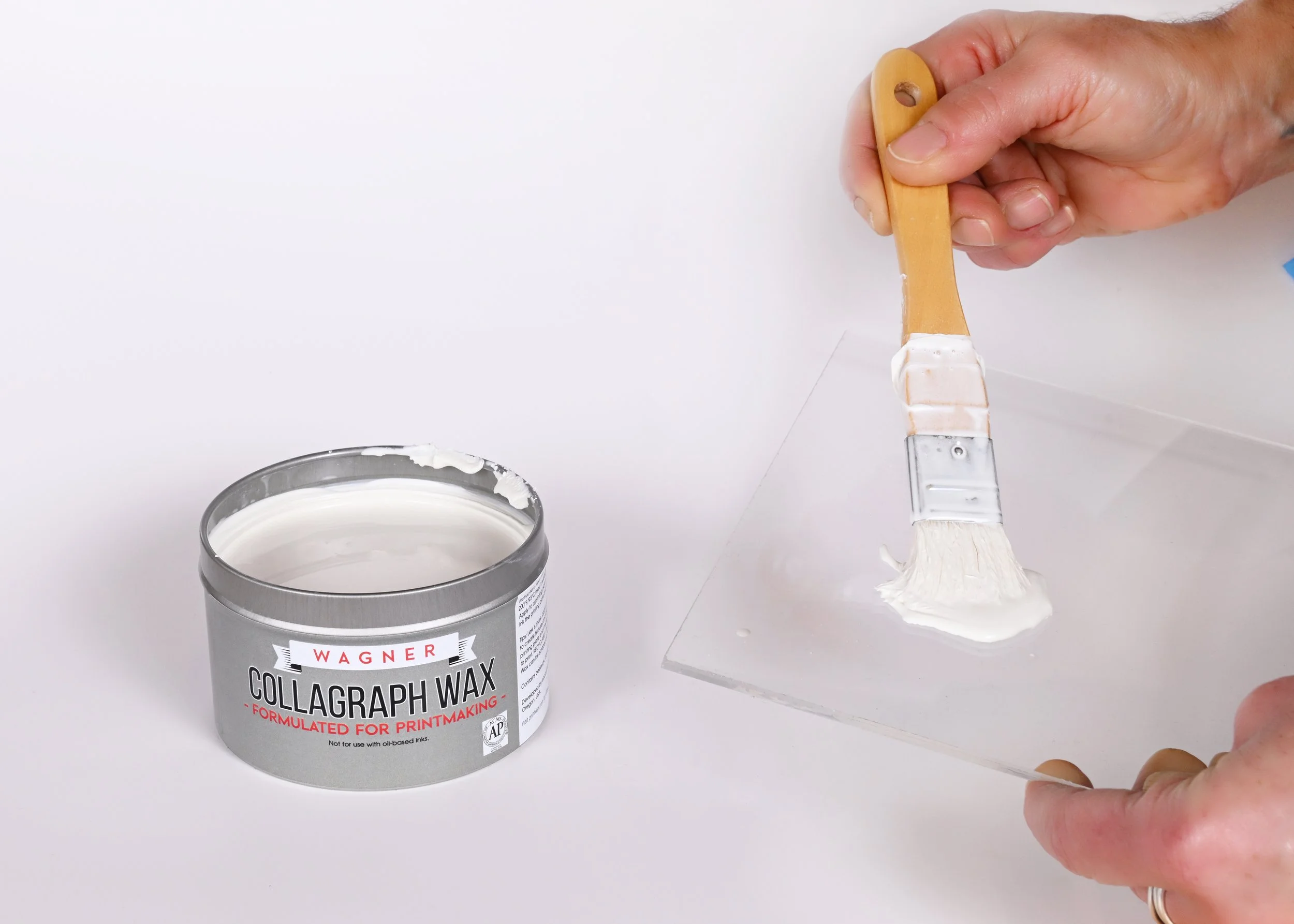
In the early years of developing Wagner Collagraph Wax, my approach was rooted firmly in encaustic painting. Around 2003, the idea of applying encaustic wax to a plexiglass plate felt radical—almost rebellious. Yet it was precisely that tension between tradition and experimentation that drew me in and kept me exploring.
Working on rigid plexiglass under the pressure of an etching press opened unexpected possibilities. Rules I had once followed in encaustic—like the need to sandblast the surface of the plexiglas or carefully fusing wax between layers—suddenly became optional. The plate, the wax, and the press began to collaborate in new ways, expanding what I thought the medium could do. Thus the adventure began…
Like encaustic painting, printmaking is a language of layers—of relief, intaglio, and depth—but it asks you to think differently. In painting, I often cover the entire surface with wax, building a continuous skin. In printmaking, especially on plexiglass, the relationship between positive and negative space becomes essential towards attaining depth.
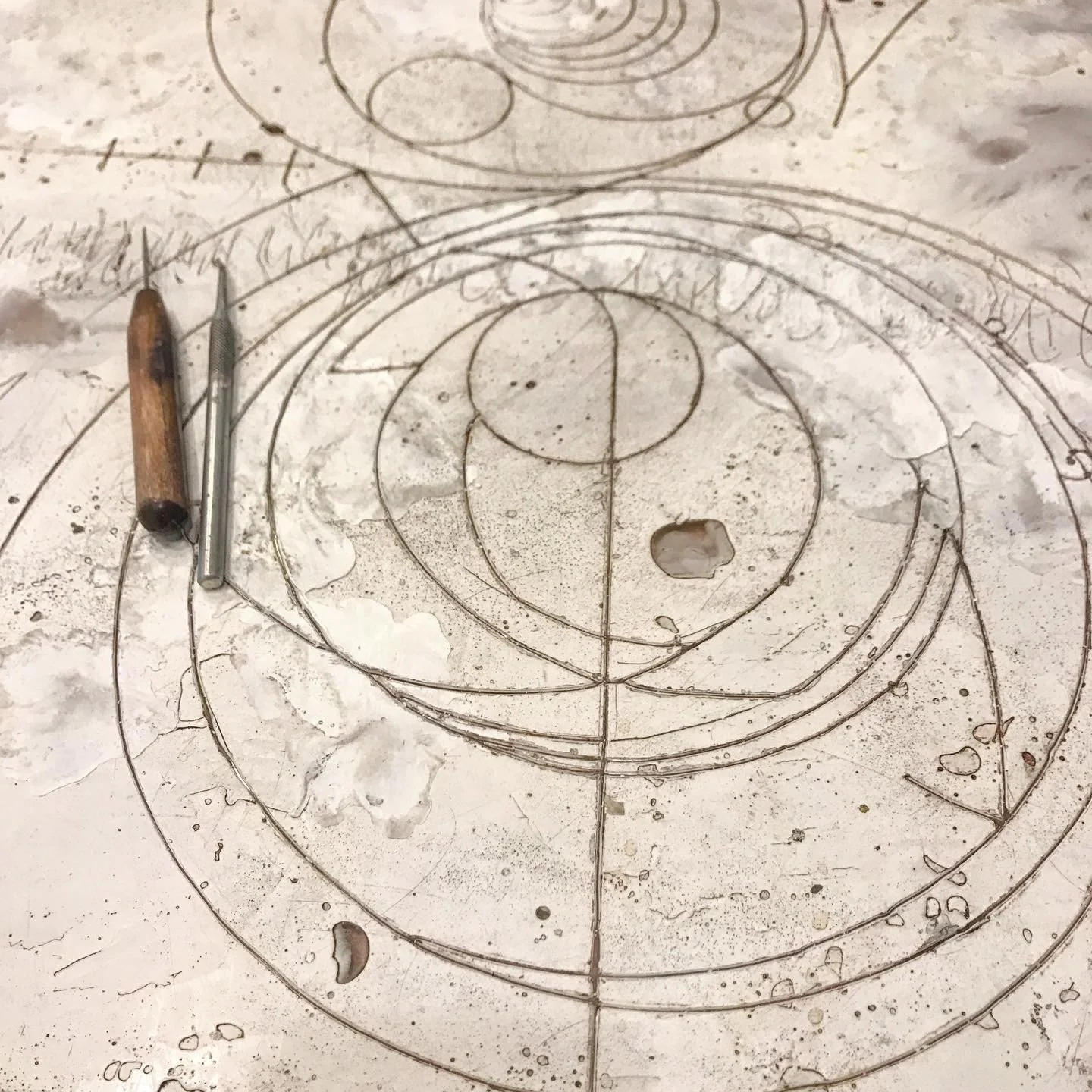
When wax enters this process, it shifts roles. It’s no longer the whole surface—it’s a strategic presence; a means to an end. A small amount can create remarkable dimensionality and nuance. I often say, “a little goes a long way—like a good eye cream,” and it’s true. Restraint becomes part of the expression.
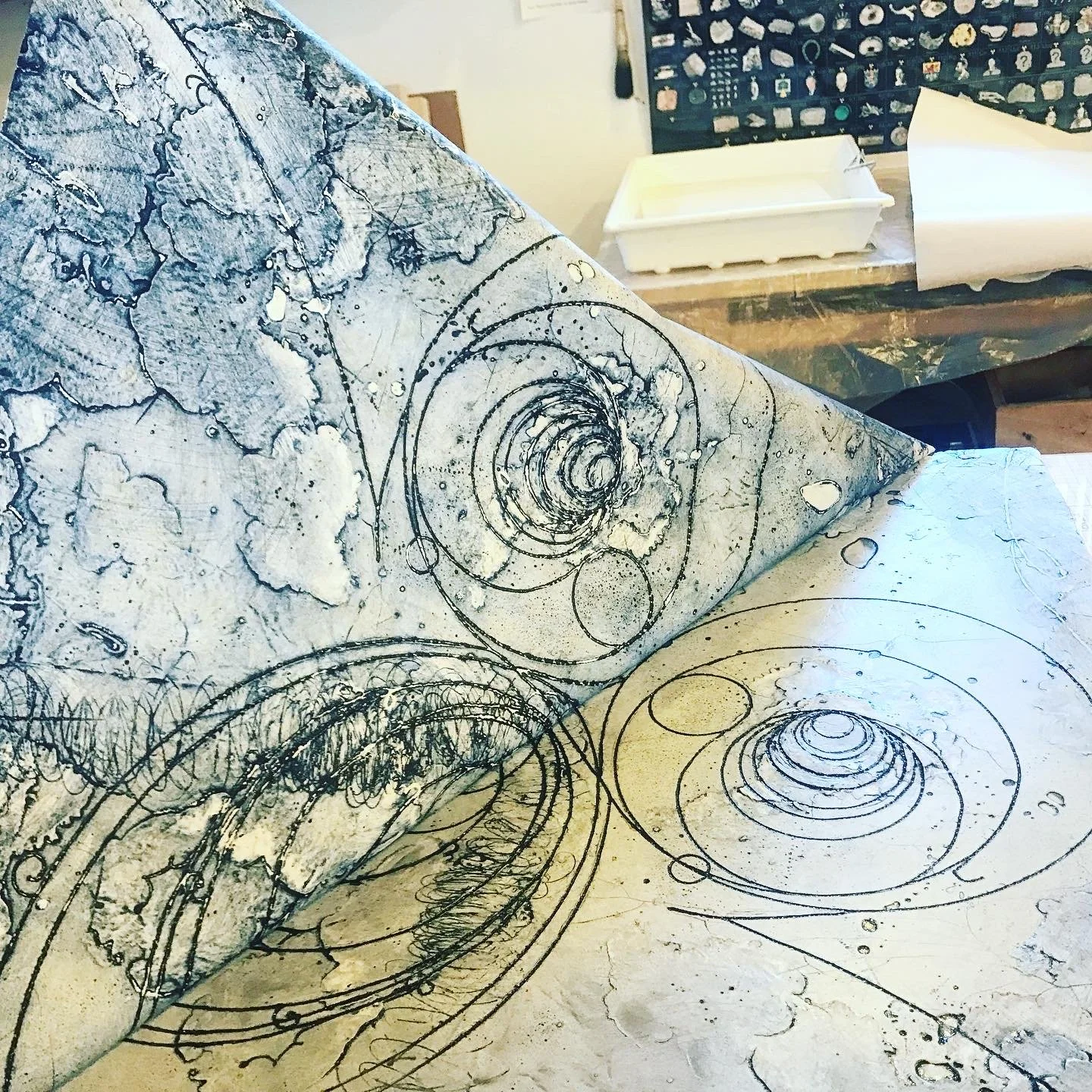
The process itself becomes more tactile, intuitive, and playful. Collagraph wax invites you to draw, scrape, emboss, and incise directly into the plate. Traditional techniques like drypoint etching merge seamlessly with the wax surface. What emerges is a layered dialogue—between line and texture, surface and depth, control and chance.
Discovery Through Experimentation
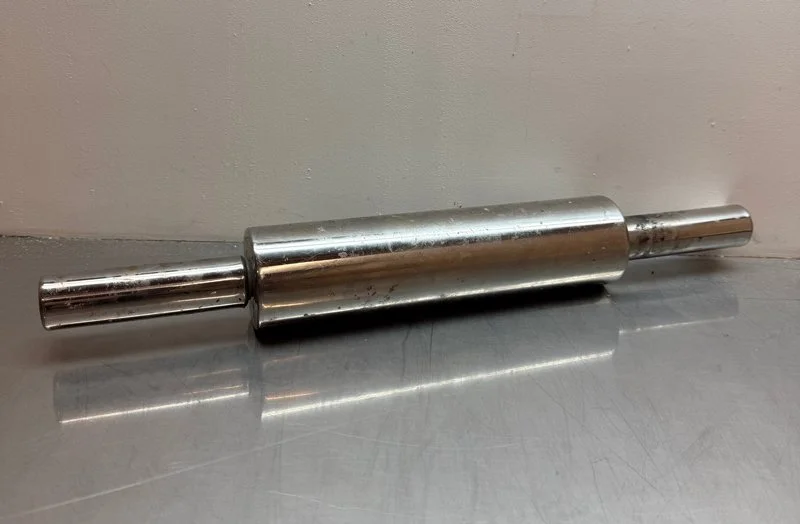
The breakthrough came from a simple moment of curiosity in the studio—and a rolling pin. “What if,” I wondered, “I applied pigment stick onto the textured surface of an encaustic painting and rolled it onto paper?”
That question led to my first experimental transfer. The earliest attempt was raw and imperfect, but it held something undeniable. Soon after, I achieved my first successful print using Akua inks. That moment marked a shift—from painterly surface to printed image, from experiment to process.
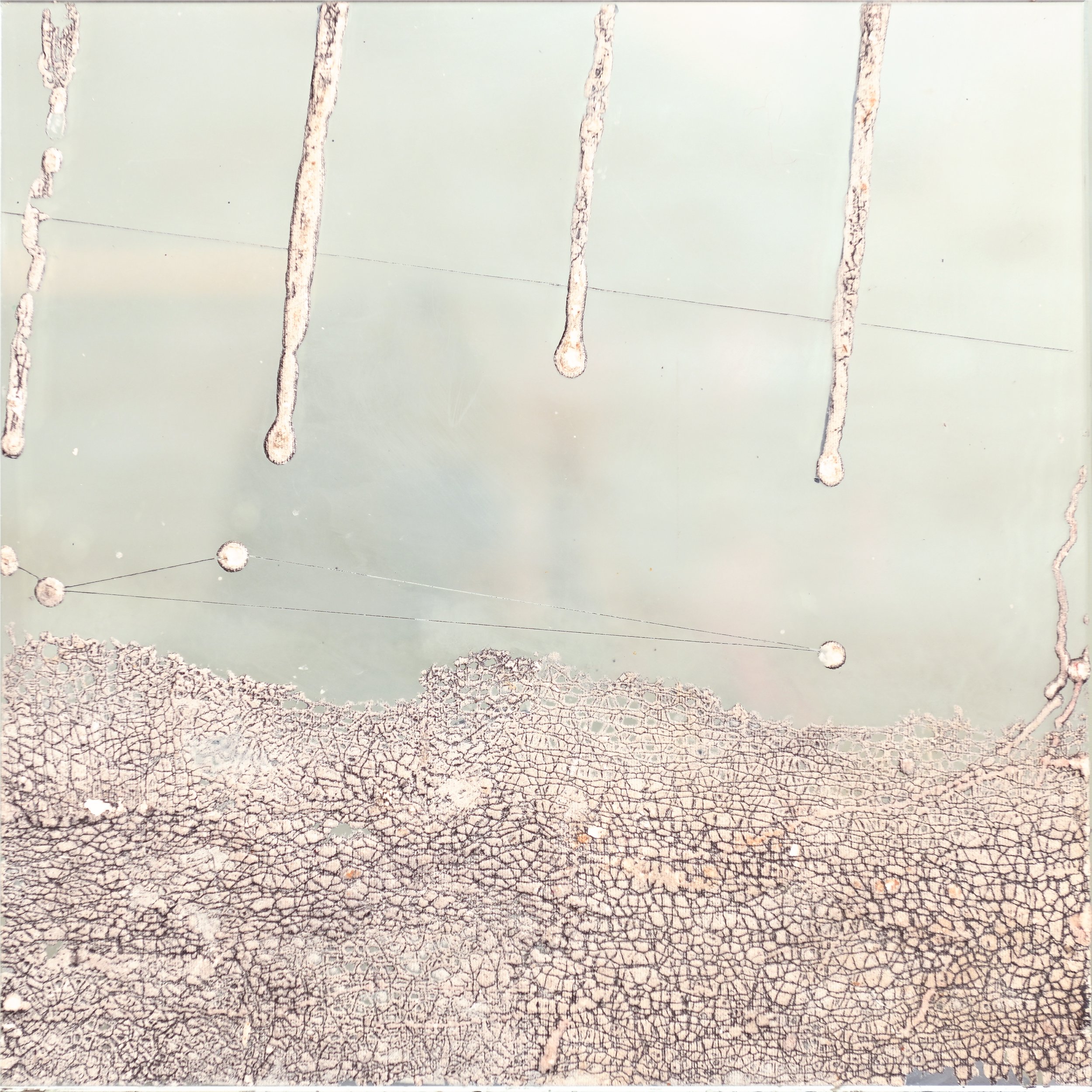
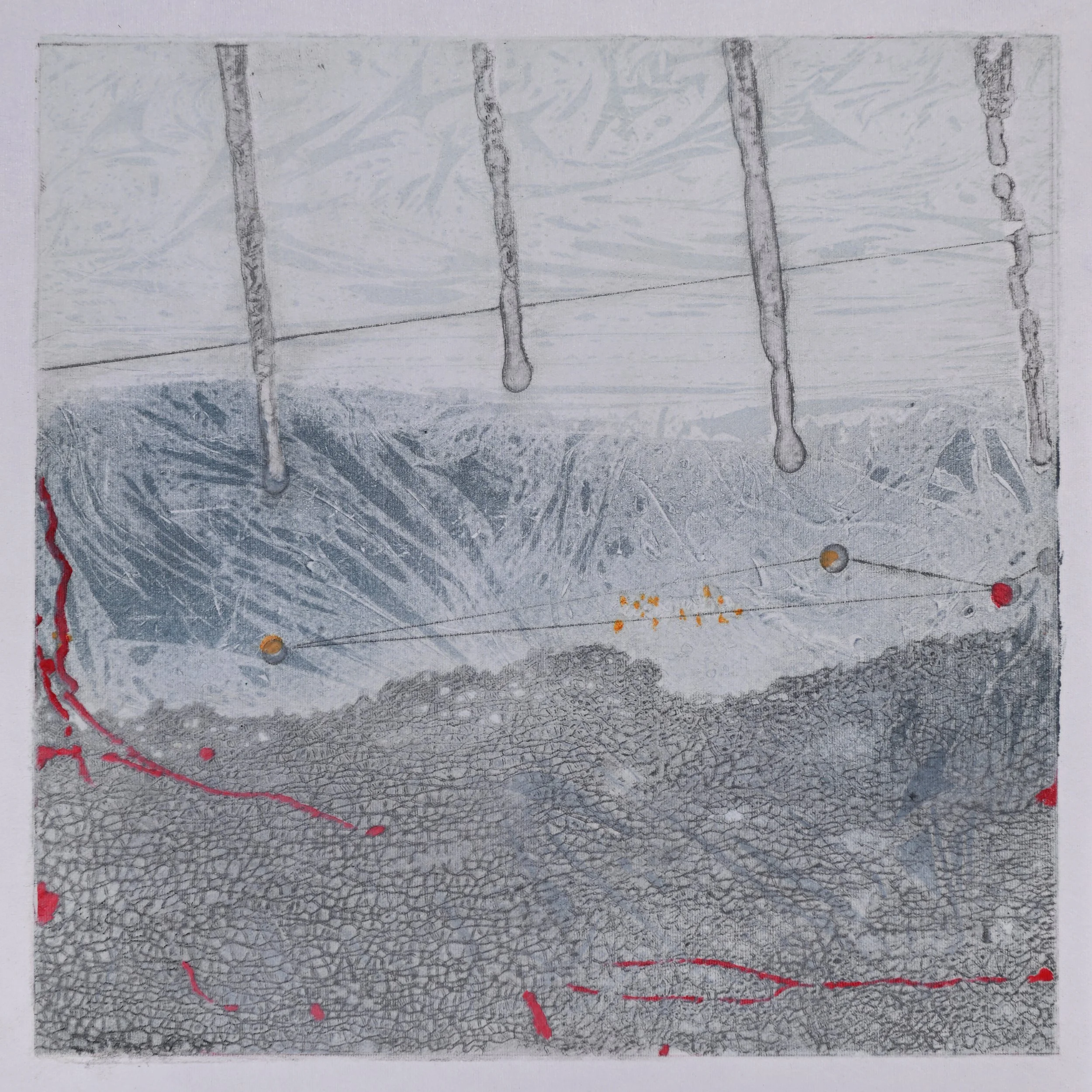
What Makes Collagraph Wax Different?
As I entered the broader world of printmaking, I quickly realized that collagraph itself was not new. Artists have long built plates from assembled materials—gluing textures to a surface to create dimensional prints. What felt entirely new, however, was the role of wax.
Collagraph wax transforms the plate into something more immediate and responsive. Rather than assembling textures, the artist creates them directly. The plate becomes less like a collage and more like a drawing—or even a low relief sculpture.
Wagner Collagraph Wax was developed with this intention: a white encaustic formula designed to withstand the pressure of an etching press while remaining flexible and reworkable. Its white surface also allows for greater visibility when applying ink, offering clarity and control throughout the process.
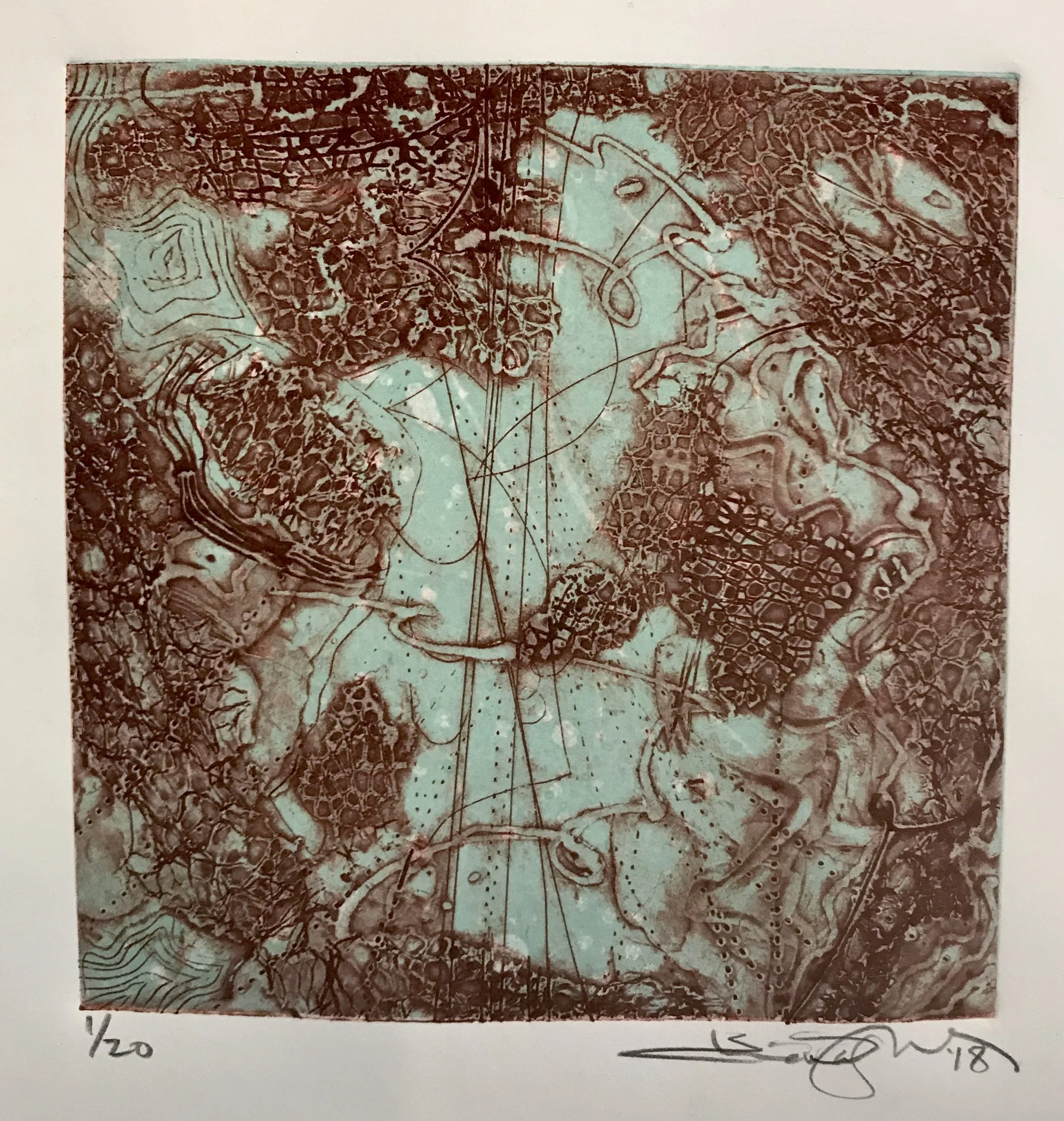
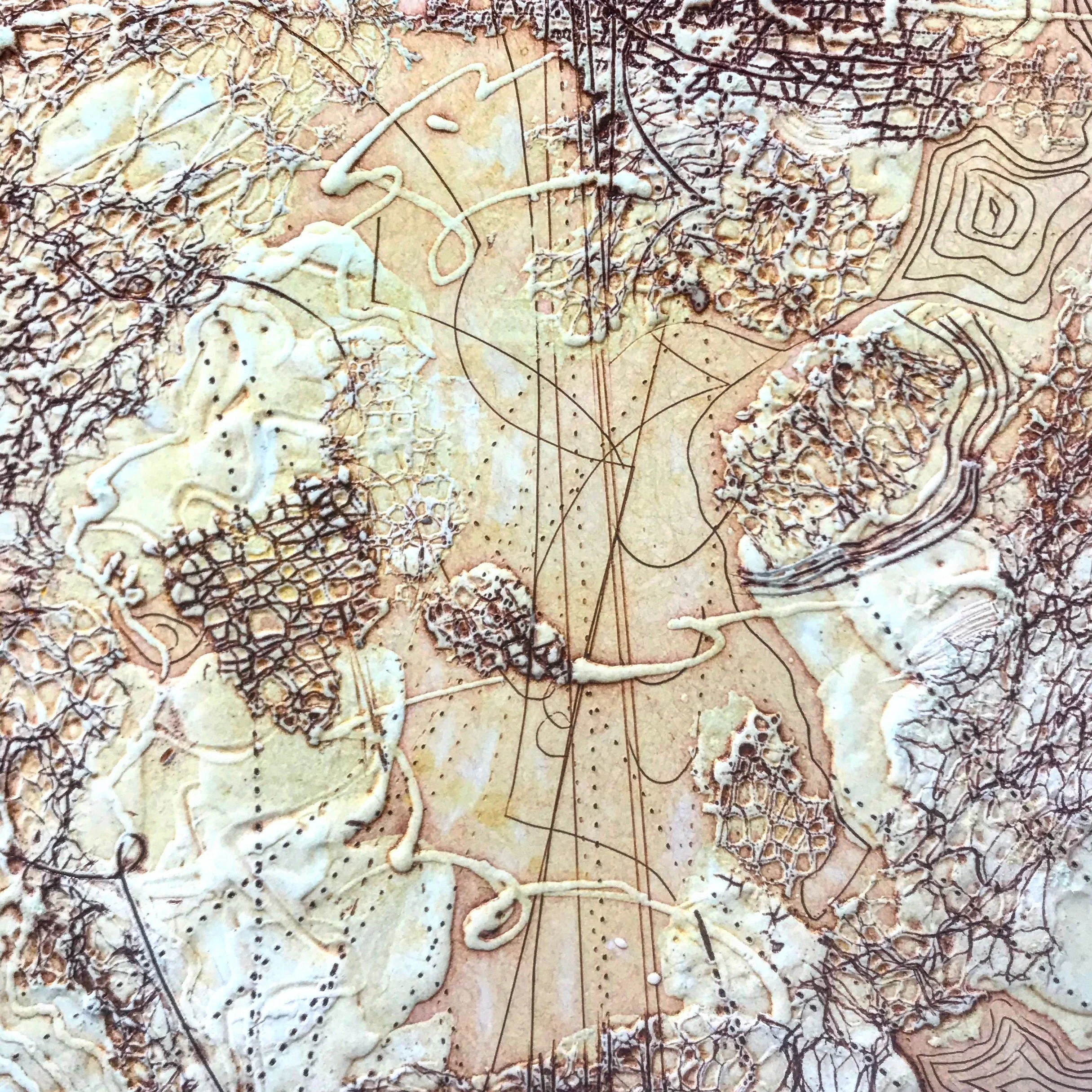
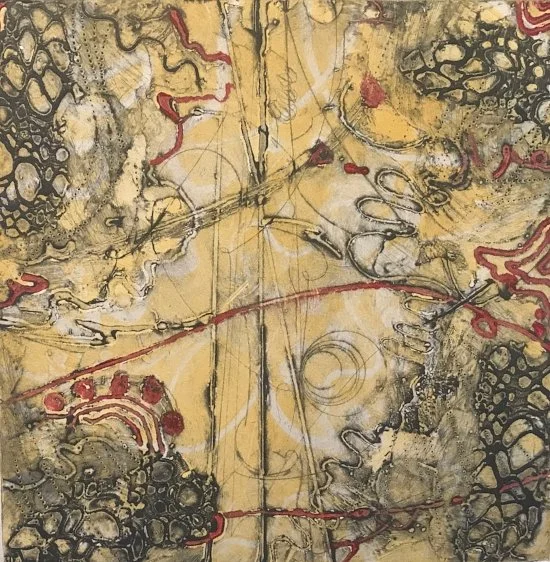
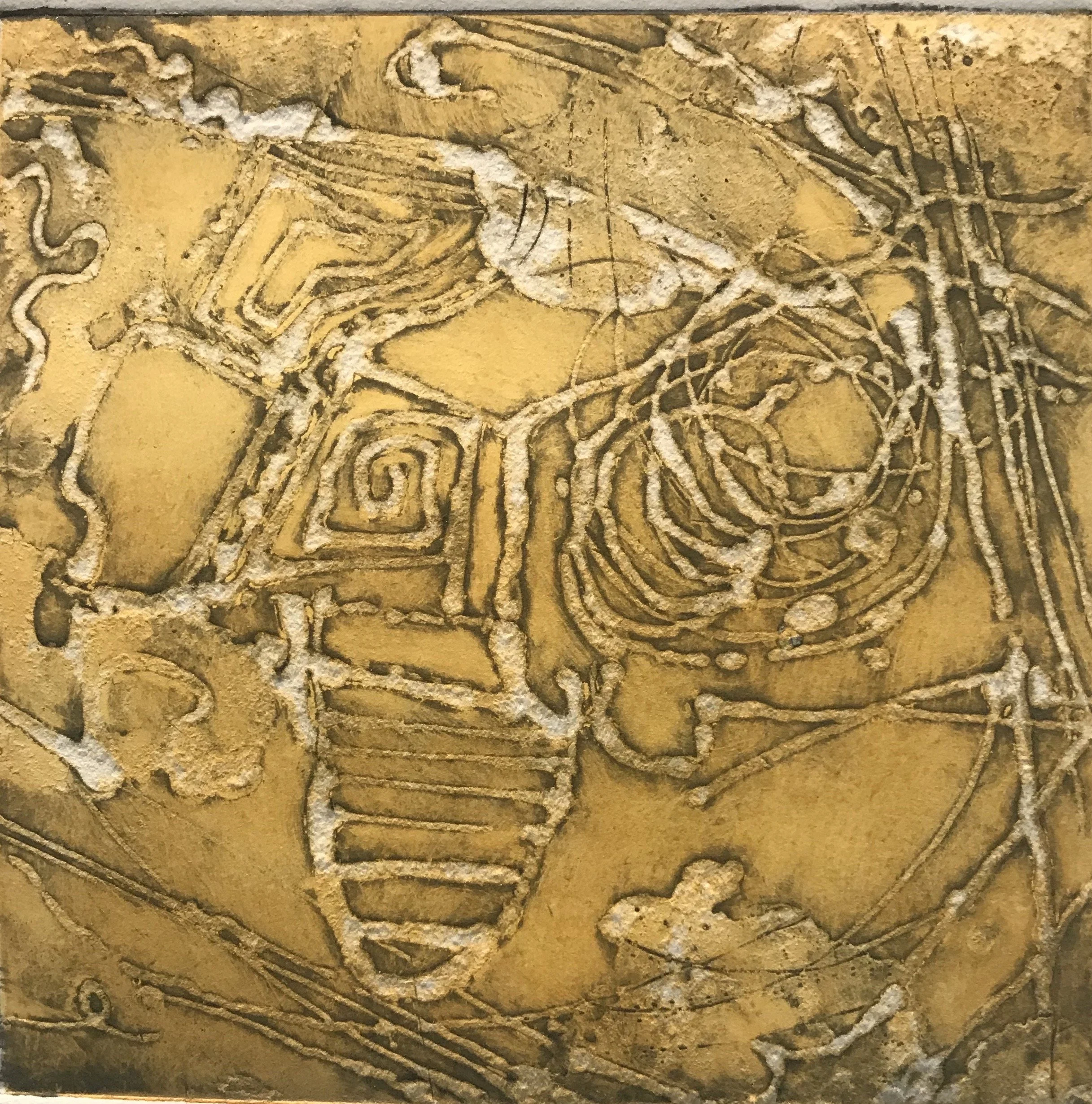
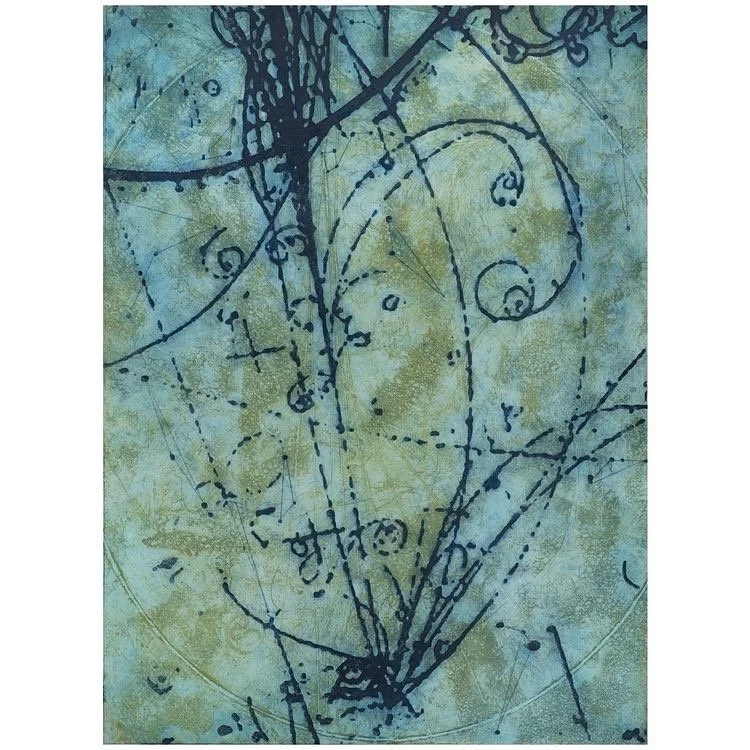
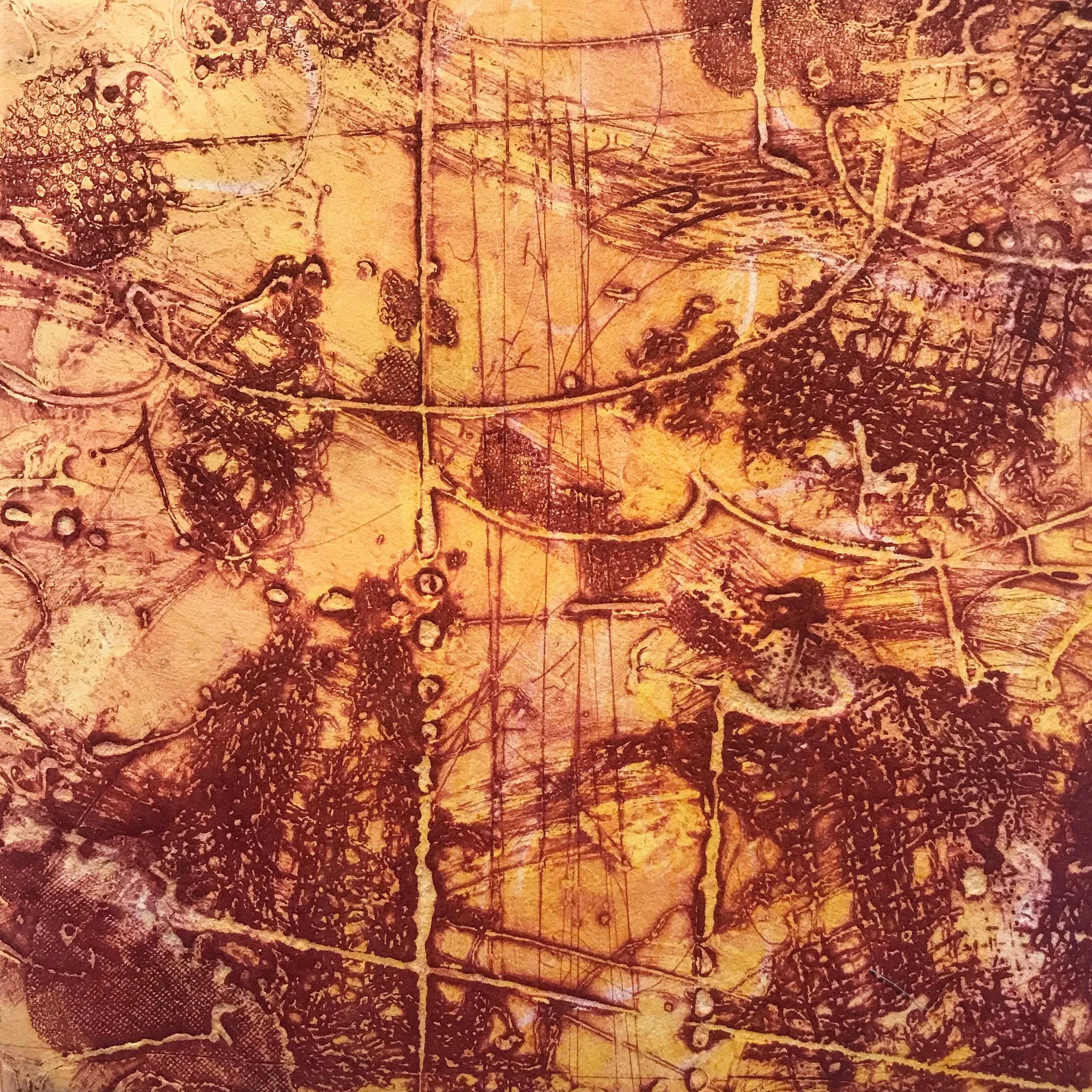
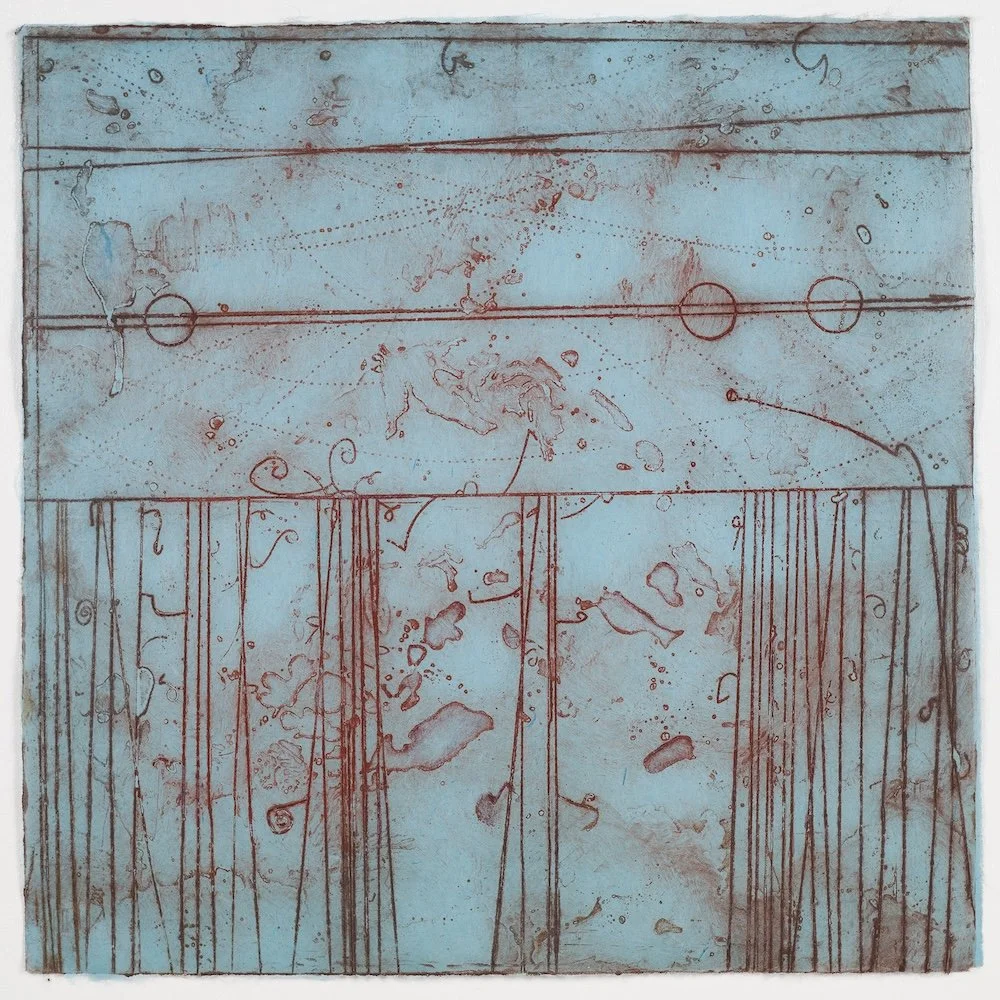
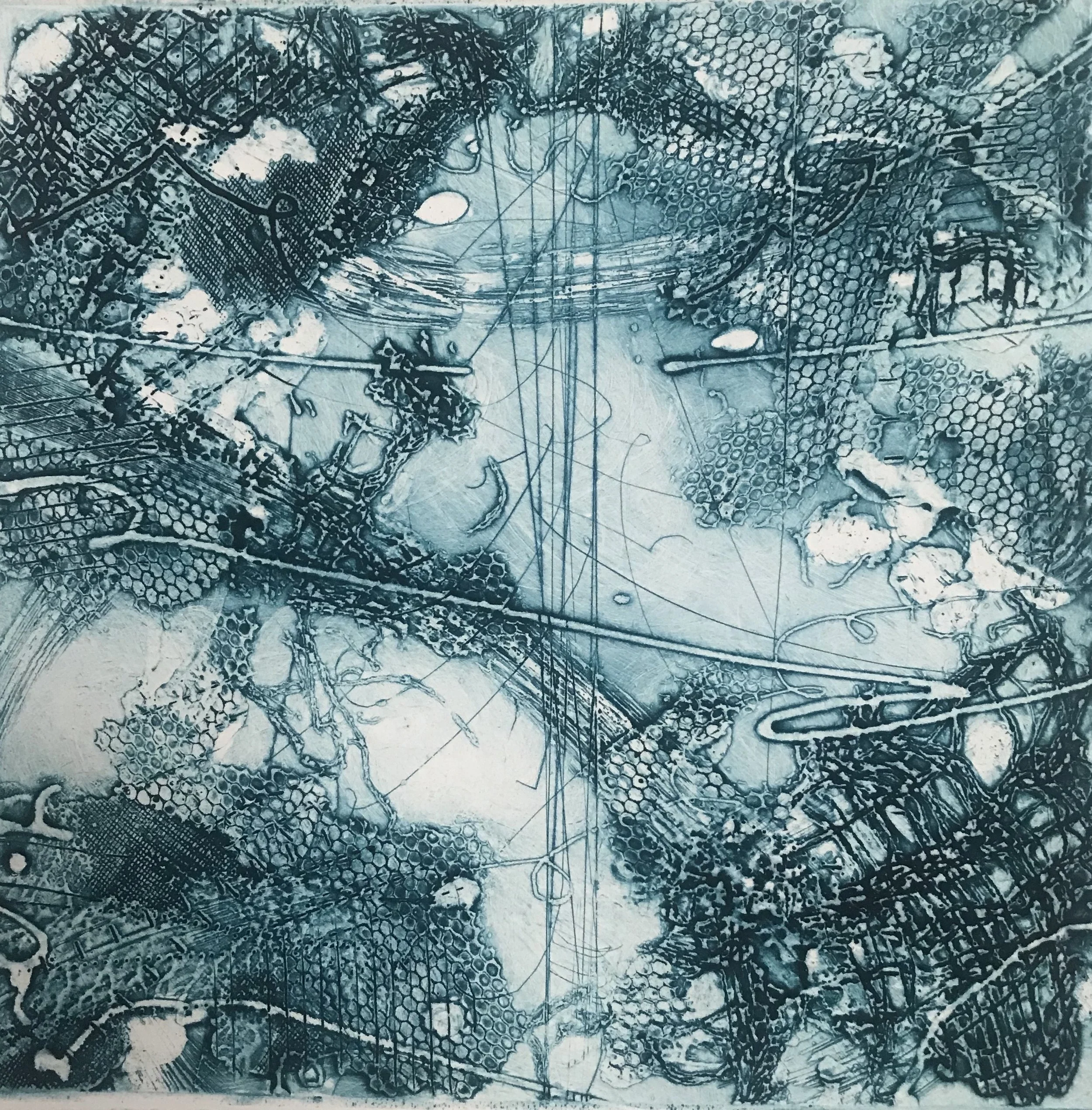
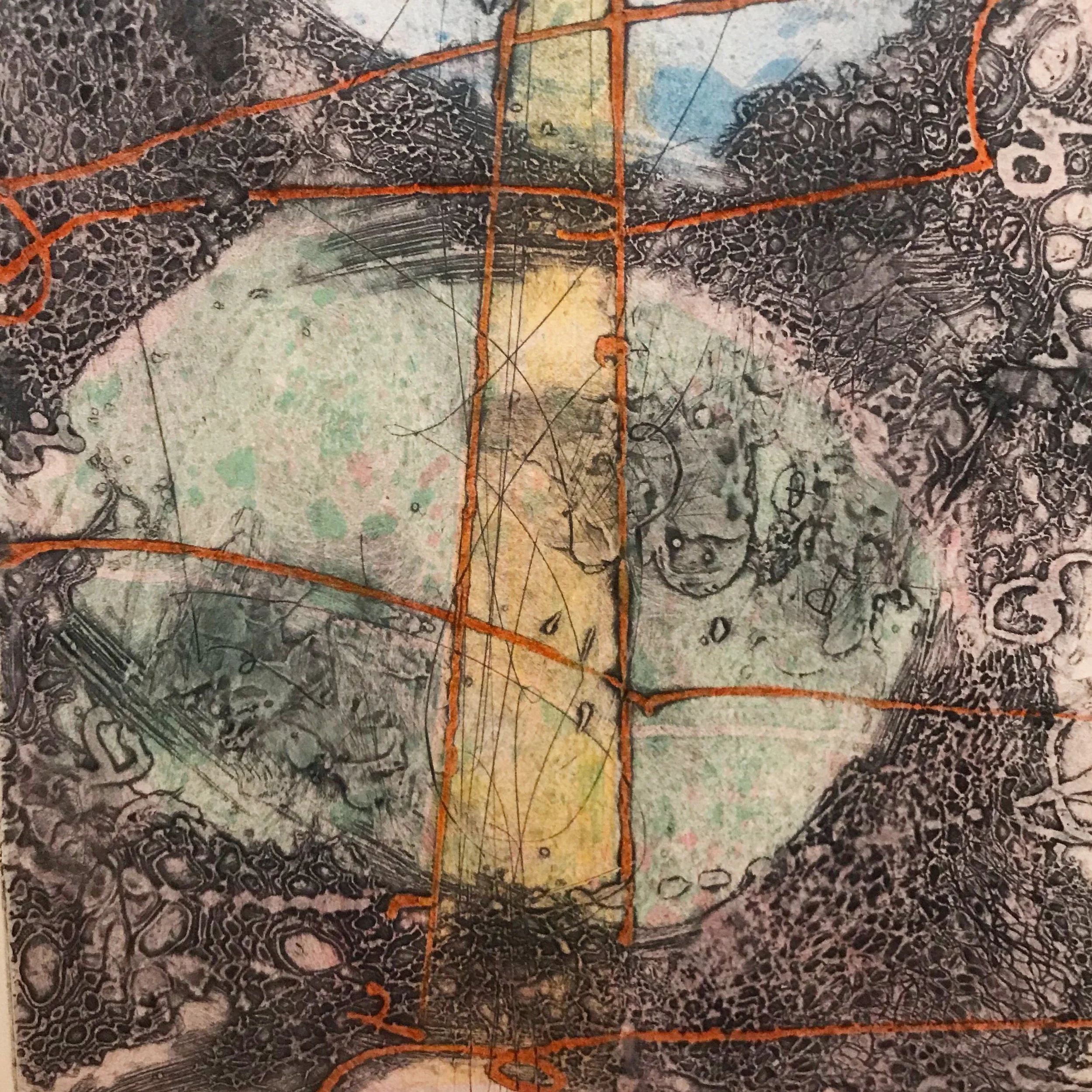
Unlike traditional methods, collagraph wax becomes the texture itself. It allows for:
• Direct, gestural mark-making
• Layering, subtraction, and revision
• Embossing fabrics and tools into the surface
• Enhanced visibility of ink due to its white pigment