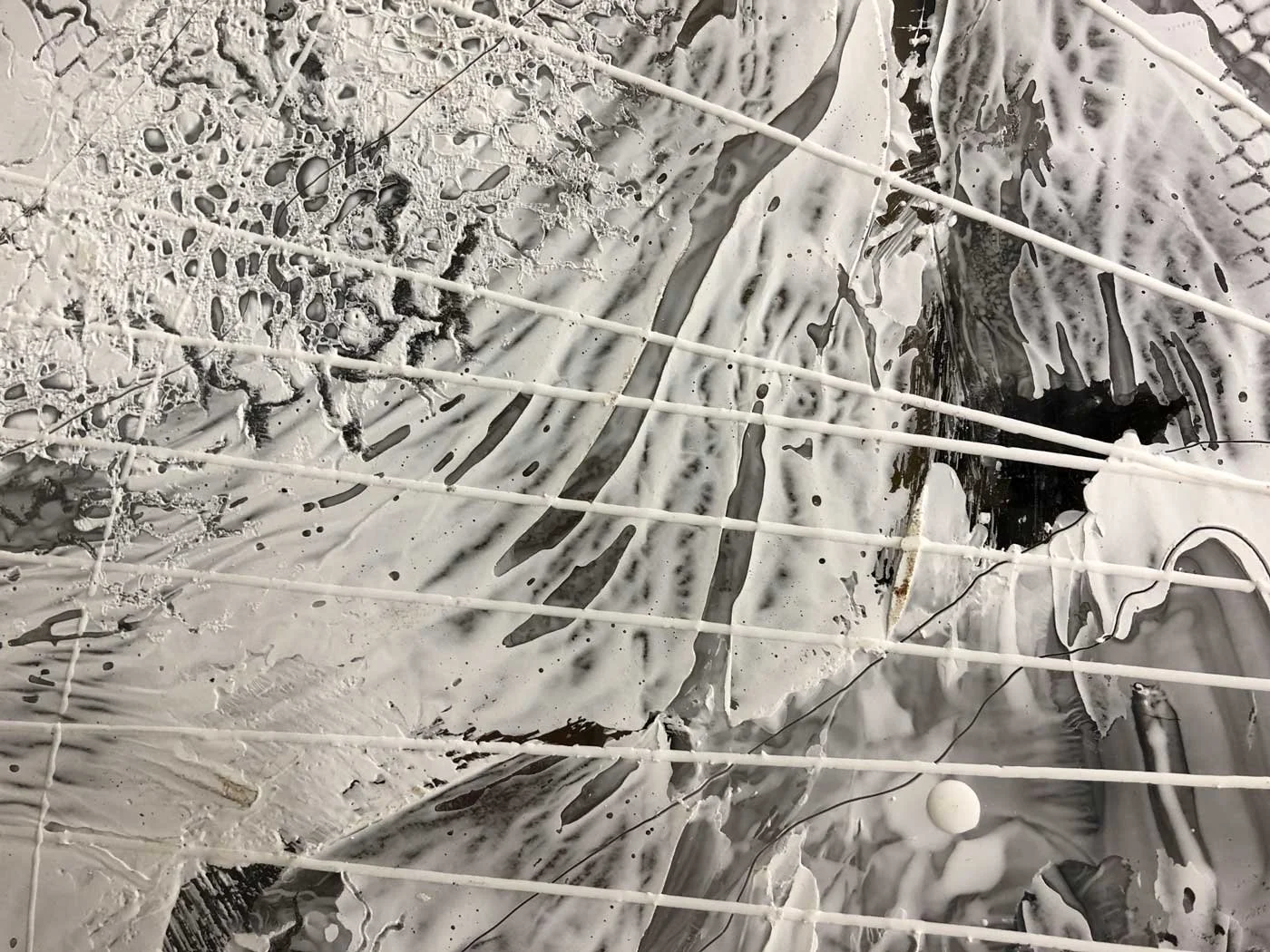
Elise Wagner: A Journey in Wax Collagraph Printmaking
Artist and educator Elise Wagner has spent her career exploring the creative possibilities of wax in printmaking. From her Pier 11 Studio in Astoria, Oregon, she develops her signature Wagner Collagraph Wax and teaches workshops throughout the year. Since 2017, she has also led a beloved annual printmaking retreat in Guanajuato, Mexico—the birthplace of Diego Rivera—adding cultural depth to the experience.
Elise’s unique wax collagraph method has taken her across the U.S. and beyond. She has taught at Artichoke Print Workshop in London, Robert Blackburn Printmaking Workshop, R&F Handmade Paints, Women’s Studio Workshop, the Center for Contemporary Printmaking, Truro Center for the Arts at Castle Hill, Pyramid Atlantic, the Printmaking Center of New Jersey, Burning Bones Press in Houston, and Summer retreats throughout Canada.
Her work continues to inspire printmakers worldwide through both her artistry and her innovative materials.
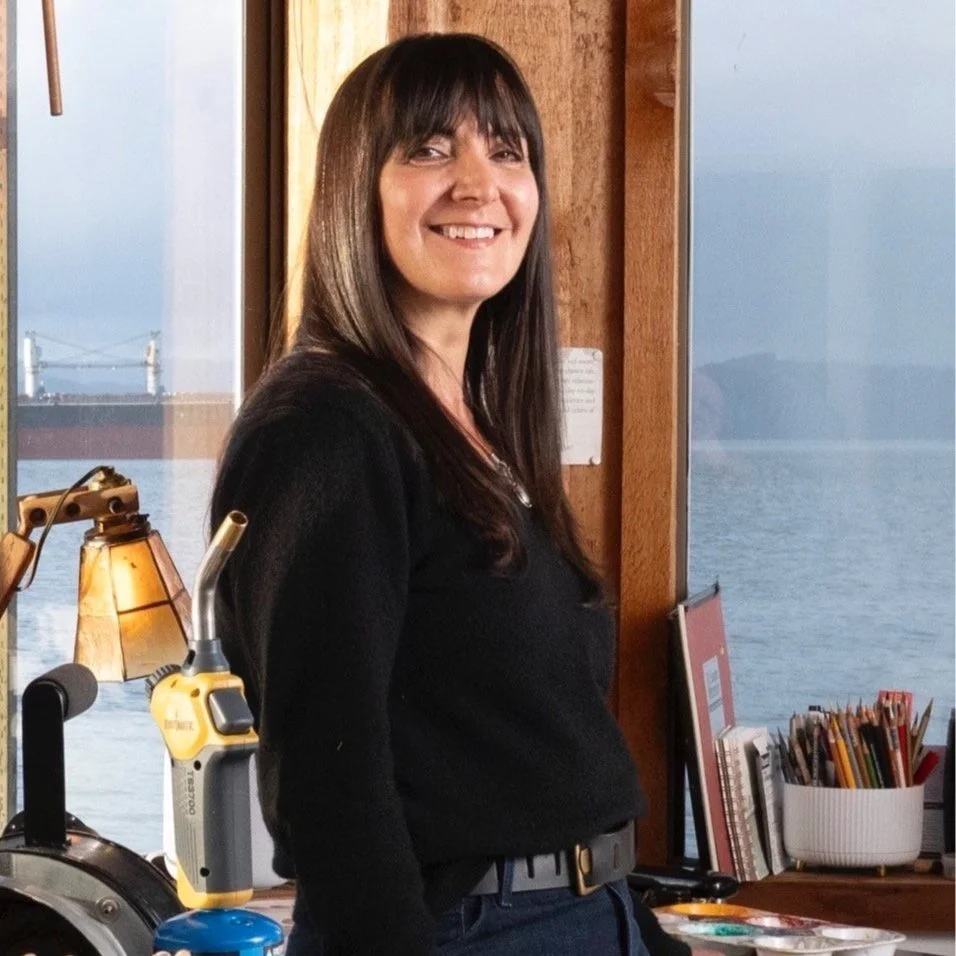
The Birth of Wagner Collagraph Wax
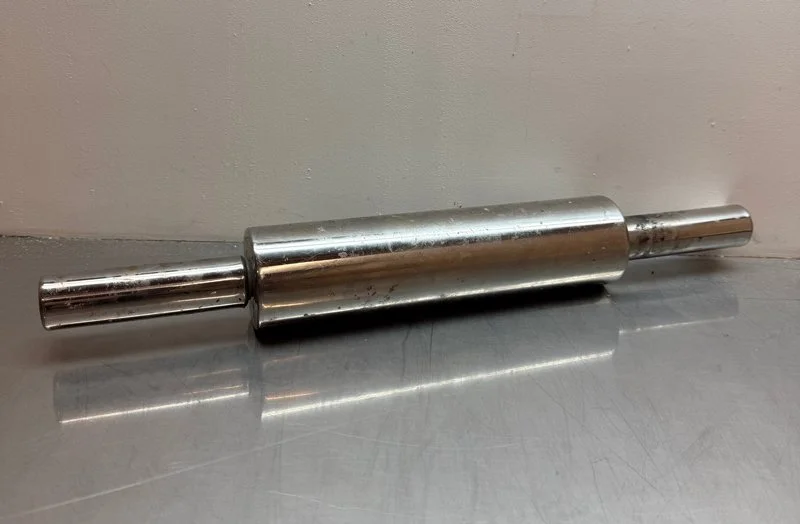
The inspiration for Wagner Collagraph Wax came during studio experiments. Elise initially attempted to print from the textures of her encaustic paintings using a kitchen rolling pin and pigment sticks. However, she quickly realized that an etching press was essential for achieving better results. The development process involved refining the wax formula to create the perfect balance of wax and damar resin, ensuring easy release from the paper. The wax is formulated with Titanium White pigment from Dolci Colori in Italy, providing visibility on the plate and clarity of ink colors.
Elise’s quest for the ideal inks led her to experiment with various options. Pigment sticks were successful printing the wax collagraph but proved too absorbent for most printmaking papers. Oil-based inks were determined unsuitable due to their boiled plate oil content, which softened the wax.
The Color of Collaboration: Introducing Wagner Collagraph White Wax for Printmaking
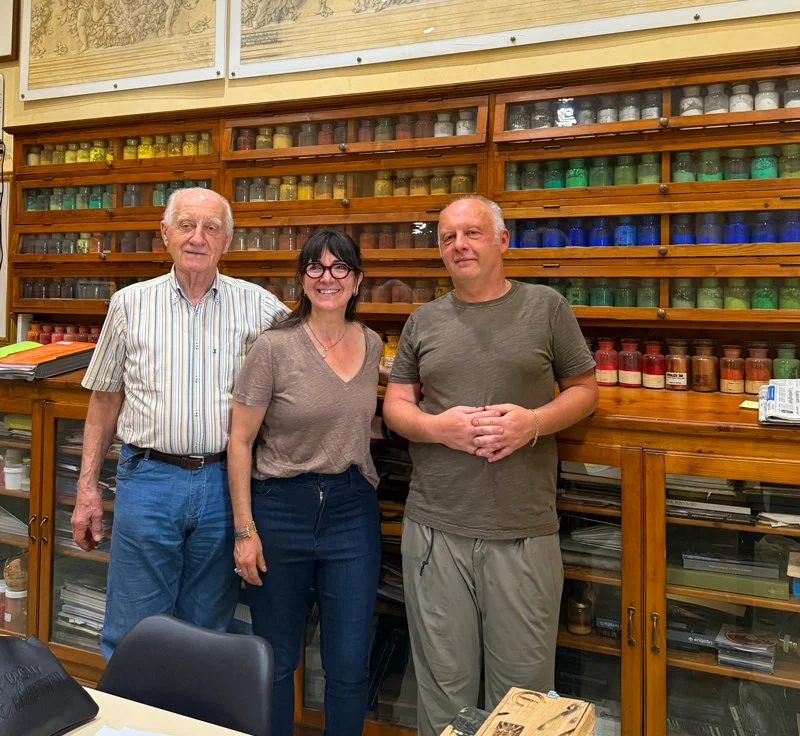
Five years ago, a simple walk through Verona, Italy, led to a destiny-defining detour. Instead of the famous Romeo & Juliet balcony, my walking tour guide, Silvia, tailored our day to my passion, leading me to Dolci Colori, a pigment store on the other side of the Adige river.
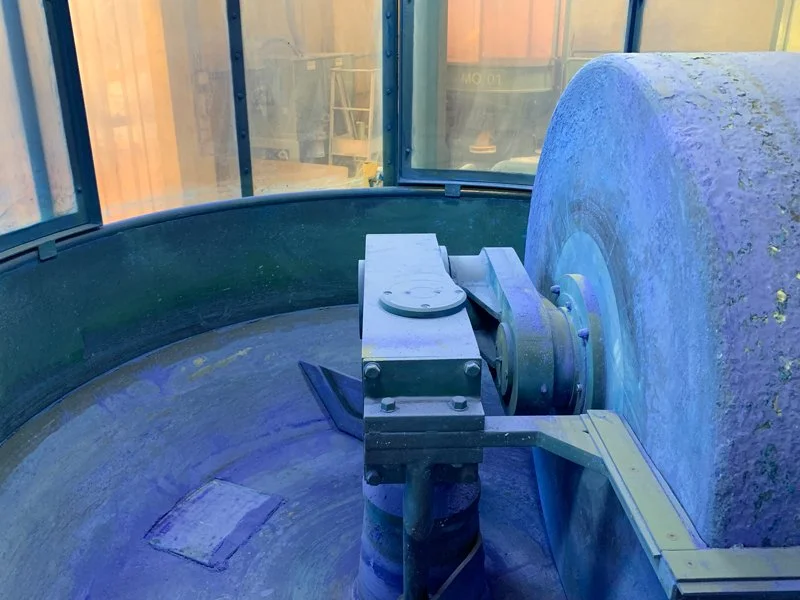
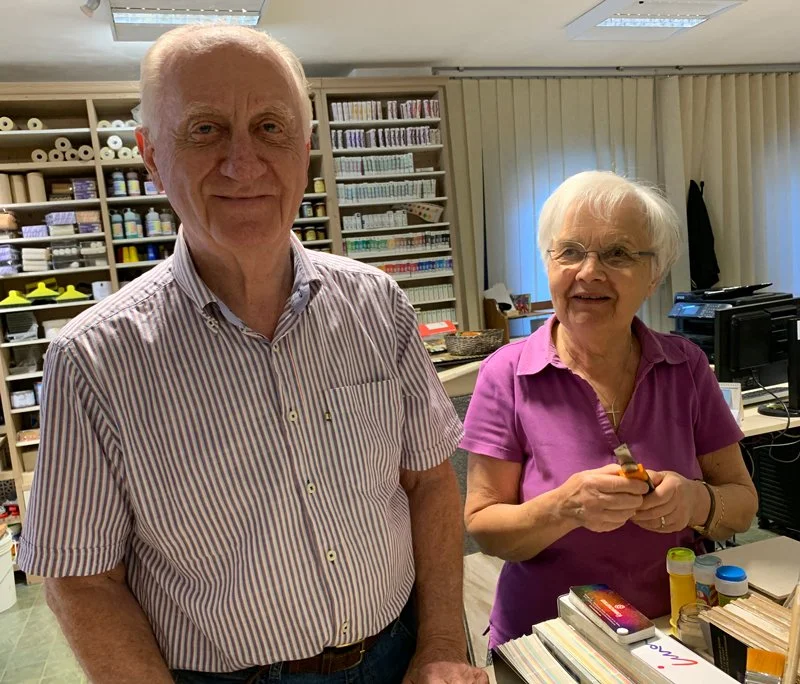
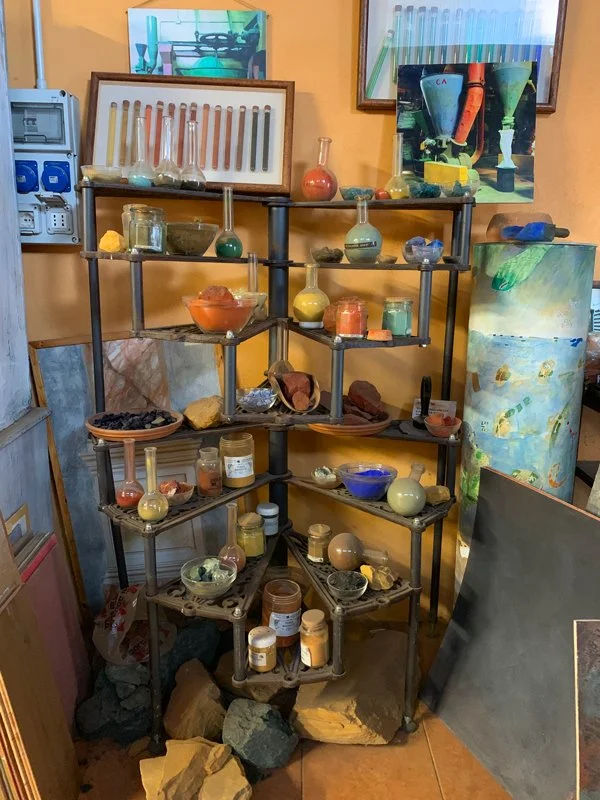
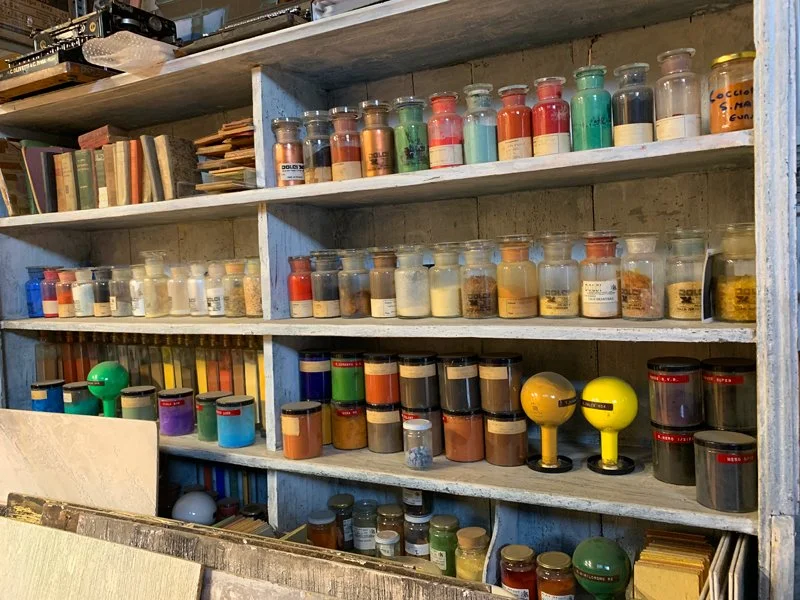
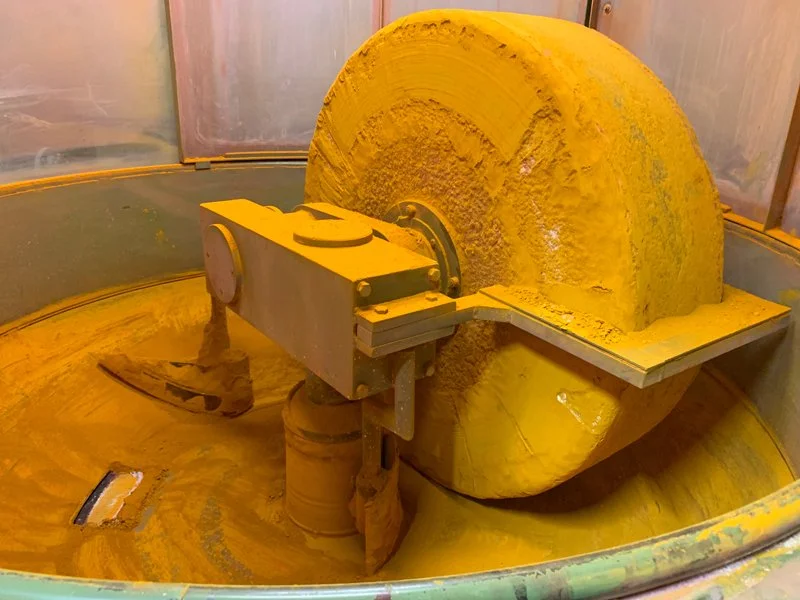
We arrived at a generations-old, family-run, environmentally conscious pigment color factory. What are the chances that in all of Italy, I would find myself ecstatic to tour a pigment factory? Dolci Colori, established in 1910, has been crafting earth colours, oxides, lime paints, and ecologic products for over a century. This tradition—four generations of working with coloring earths—is why their pigments are timeproof, a quality guaranteed by ancient 30-thousand-year-old rupestrian inscriptions and magnificent Greek-Roman frescos.
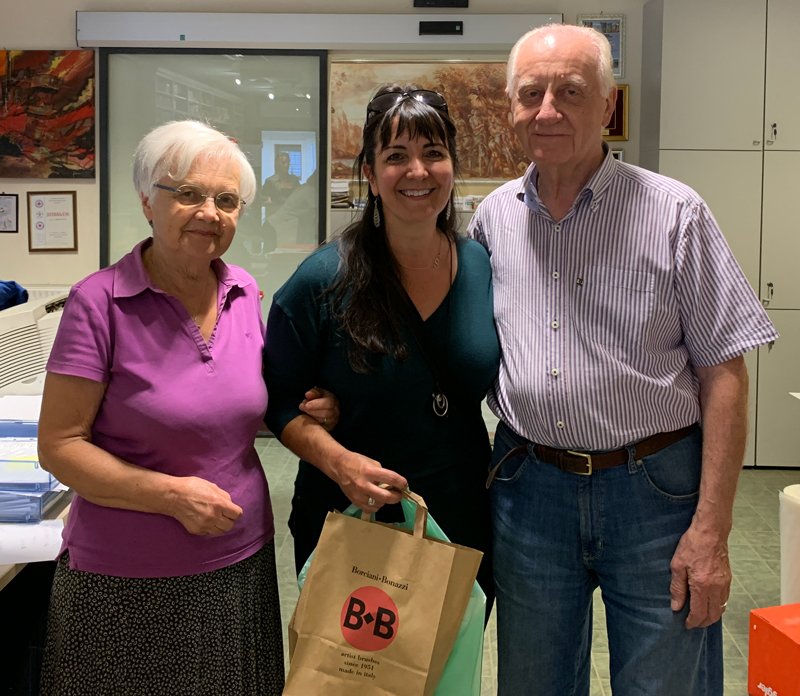
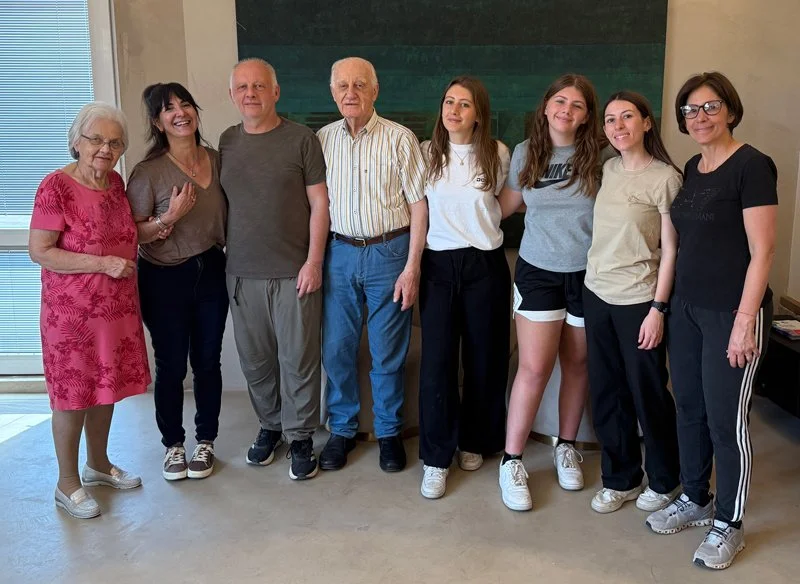
The minute the staff learned I was an artist working with encaustic, they immediately offered me a full tour. I was in awe as Mariella and Giuliano Dolci graciously welcomed me into their family business. They create colors for artists, painters, and supply major fashion and cosmetics companies like Armani, Levi, and L'Oréal. After the tour, Giuliano and Mariella—who knew all about encaustic—helped me determine which of their beautiful pigments to buy. I brought five of them home, double-bagged in my suitcase.
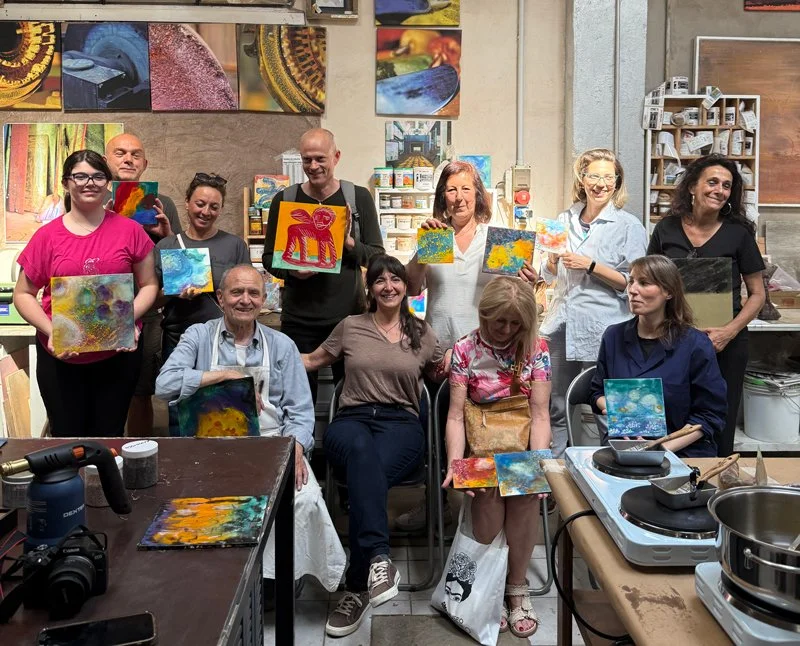
Every time I mix a color, I’m reminded of that extraordinary day back in 2019. When I arrived home, I dreamed of going back to teach a class. That dream became reality this year, in late May, when I returned to Dolci Colori to share encaustic painting using their incredible pigments. It was a beautiful, extraordinary, and unforgettable day of teaching, connecting, and learning in Verona. Art is the universal language of peace and joy, and it’s deeply embedded in this culture.
Today, that initial curiosity has blossomed into a beautiful, cross-continental collaboration. We are thrilled to announce that Dolci Colori in Verona is now the new raw materials supplier for @print.wax!
This partnership is especially close to my heart. It is grounded in craft, tradition, and shared passion, and it is the foundation for our product: Wagner Collagraph White Wax for Printmaking.
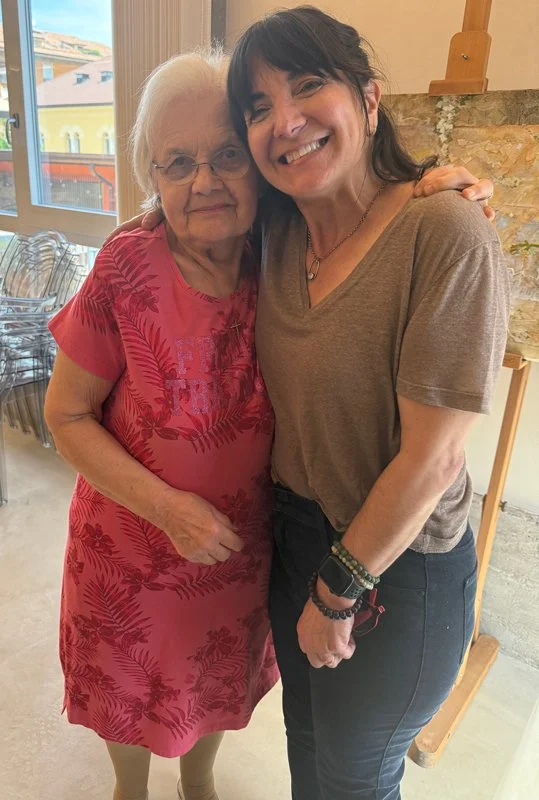
A heartfelt thank-you to Andrea, Giuliano, Mariella, and all of the Dolci family for making this possible. Follow along!
Benefits for Artists
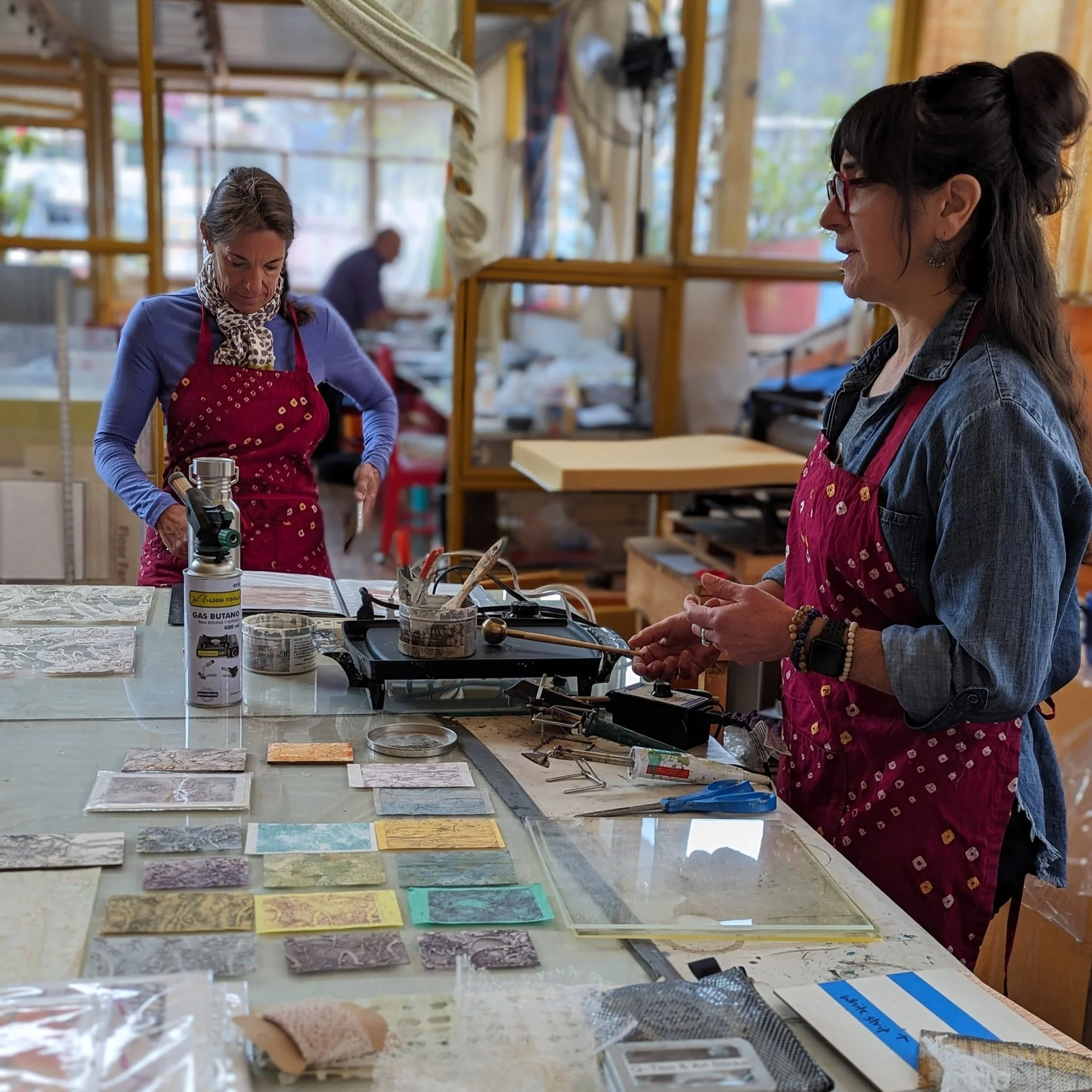
Wagner Collagraph Wax offers printmakers a reliable new way to print collagraphs using wax. The wax is white which enables you to see it and the ink colors with more precision as they are applied to the plate. Unlike permanent materials like wood glue or clear acrylic mediums, the wax is pliable like clay, allowing artists to make marks directly into it, emboss fibers or fabrics, and create lines with batik tools. The wax is recyclable, removable, and has an eternal shelf life. A small amount goes a long way, enabling artists to produce up to 20 prints from each plate before textures begin to break down. The plate can be augmented and its textures rebuilt. The wax resists moisture and does not dry out, and cleaning brushes is optional as they can be left in the can for reheating. Using the wax requires a hotplate and a hog hair brush, taking up to an hour to become fully molten, and it can remain consistently heated at 200°F or 93°C. Uncontaminated wax can be scraped off and reused.
Artistic Application
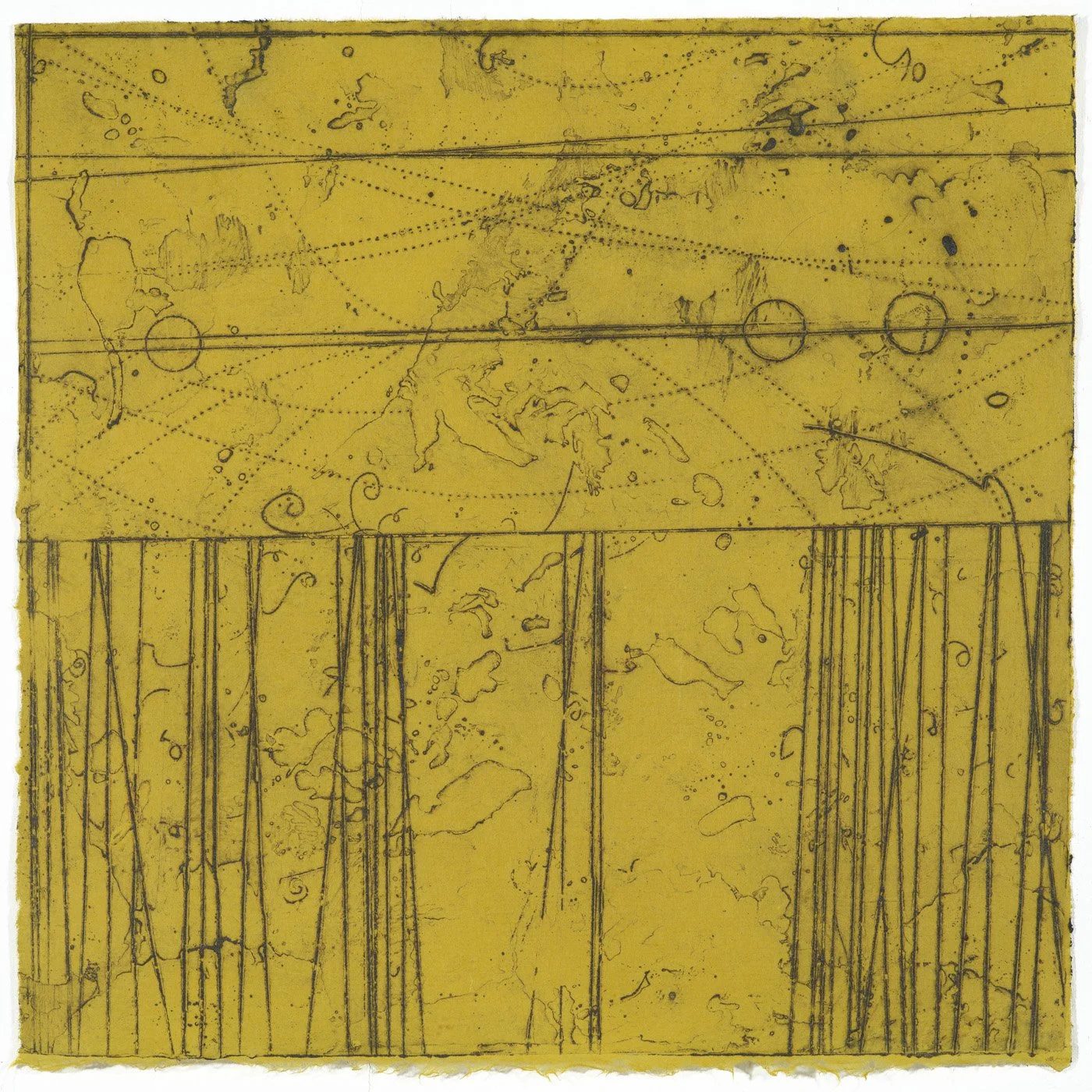
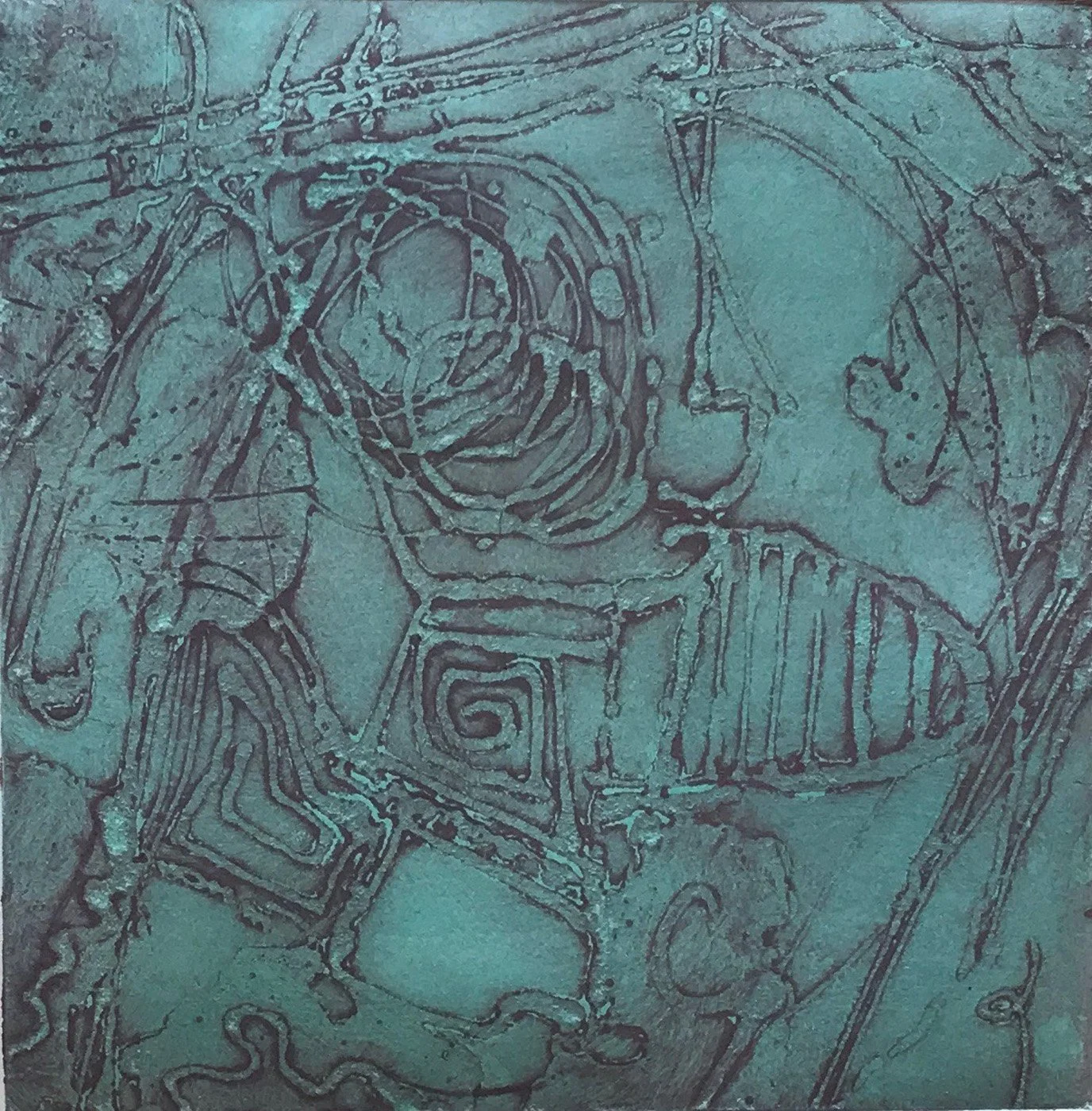
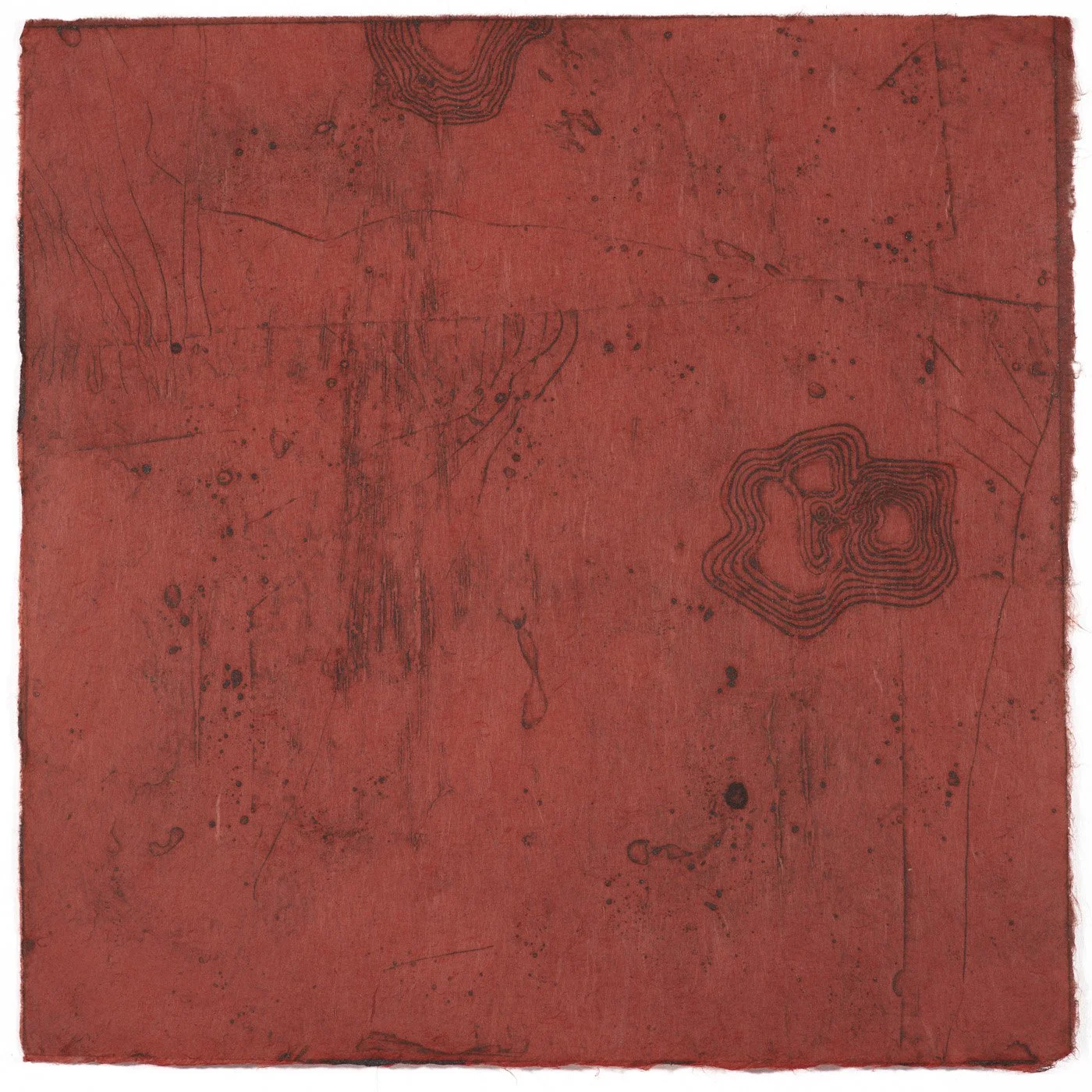
As an oil and encaustic painter, Elise often describes herself as a “closet printmaker.” Her printmaking practice evolved alongside the development of her wax collagraph method and product. Her prints are frequently integrated into her encaustic paintings. Elise initially printed on heavier papers like Rives BFK white, buff, and light blue, Fabriano, and Stonehenge. Recently, she has been working with Kozo, Kitakata, dyed Hanji papers, and Evolon, a microfiber nylon. These papers release easily from the collagraph and handle significant pressure on the etching press, fusing into the wax surface of her paintings. Dyed papers are particularly useful as they provide a background color without requiring a double drop background print. Elise enjoys building the matrix of her plates with drypoint etching, relief lines, and embossing woven fibers, which create incredible texture and depth highlighted by the inks. She also uses Ampersand Claybords as printing plates, which work exceptionally well, though they are opaque white and cannot be seen through like traditional acrylic plexiglas plates. Tjanting line-making tools, commonly used in batik, are among her favorite mark-making tools.
THE COMBINED FORCES OF WAGS & PAGS
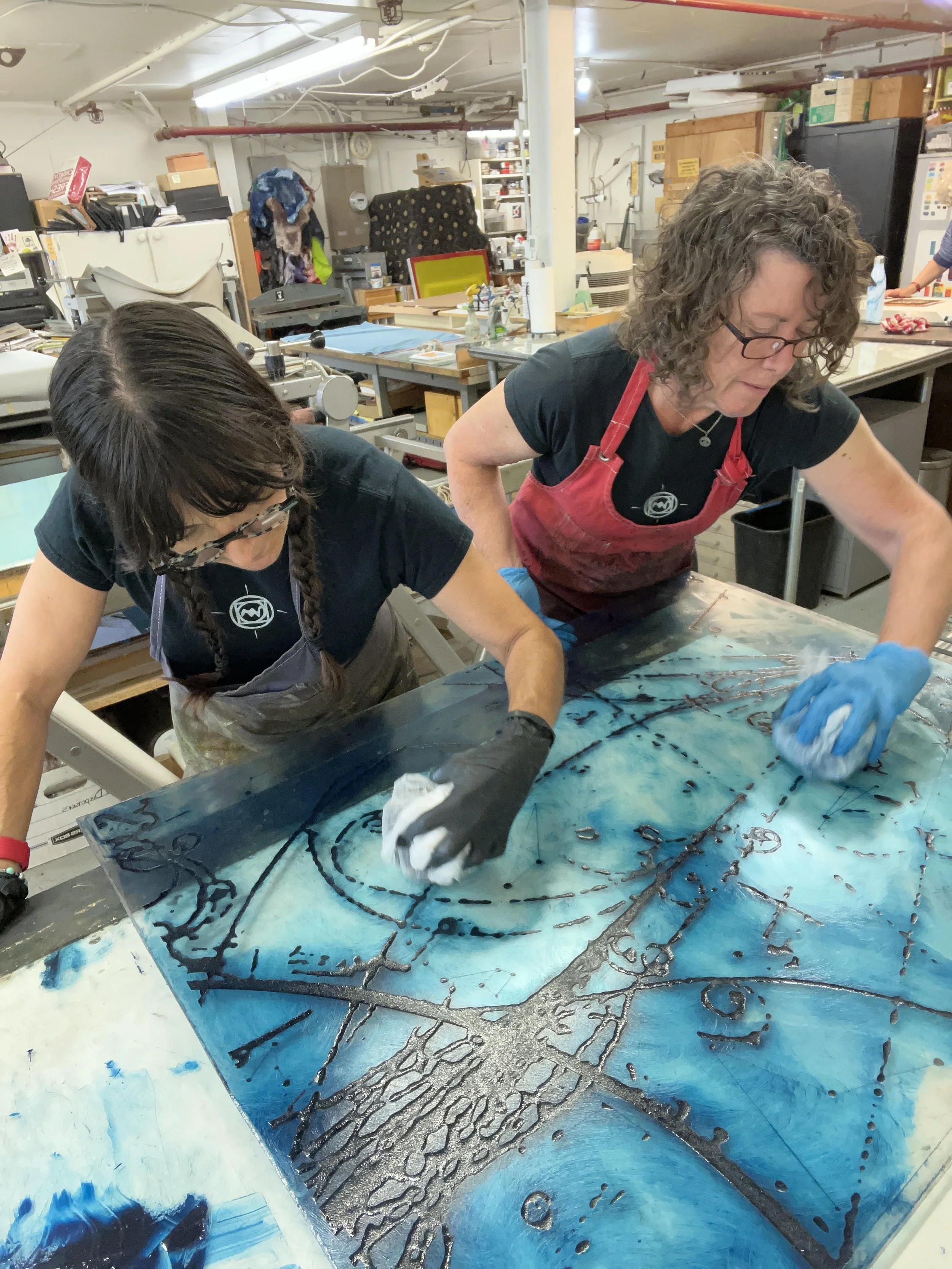
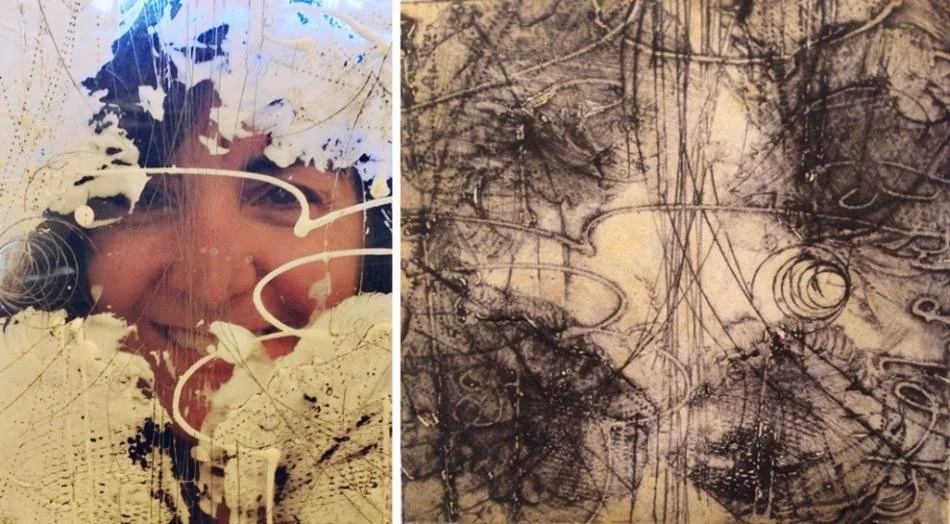
Two decades ago, artist Elise Wagner teamed up with Master Printmaker—and fellow Italian Jersey Girl—Jane Pagliarulo. They met at a Children’s Heart Foundation art fundraiser: Jane printing on her press, Elise painting with wax. A spontaneous attempt to print a wax collagraph with oil-based inks led to a comically disastrous, sticky mess—but also sparked a shared curiosity.
Drawing from their individual strengths—Elise as an encaustic painter and Jane as a seasoned printmaker—they dove into finding the perfect ink-to-wax pairing. Their solution came in Speedball’s Akua Intaglio inks, whose soft and fluid soy-and-honey base worked seamlessly with beeswax and finally let the paper release cleanly from the plate.
From there, Wags & Pags was born. Together they taught workshops around the country, presented their method at the SGC International and the International Encaustic Conferences, and helped shape the evolution of wax collagraph printmaking. Today, the duo continues to reunite for intimate and entertaining weekend workshops at Elise’s waterfront studio on the Oregon Coast—still blending their expertise, still inspiring printmakers, and still very much the dynamic duo of Wags & Pags.