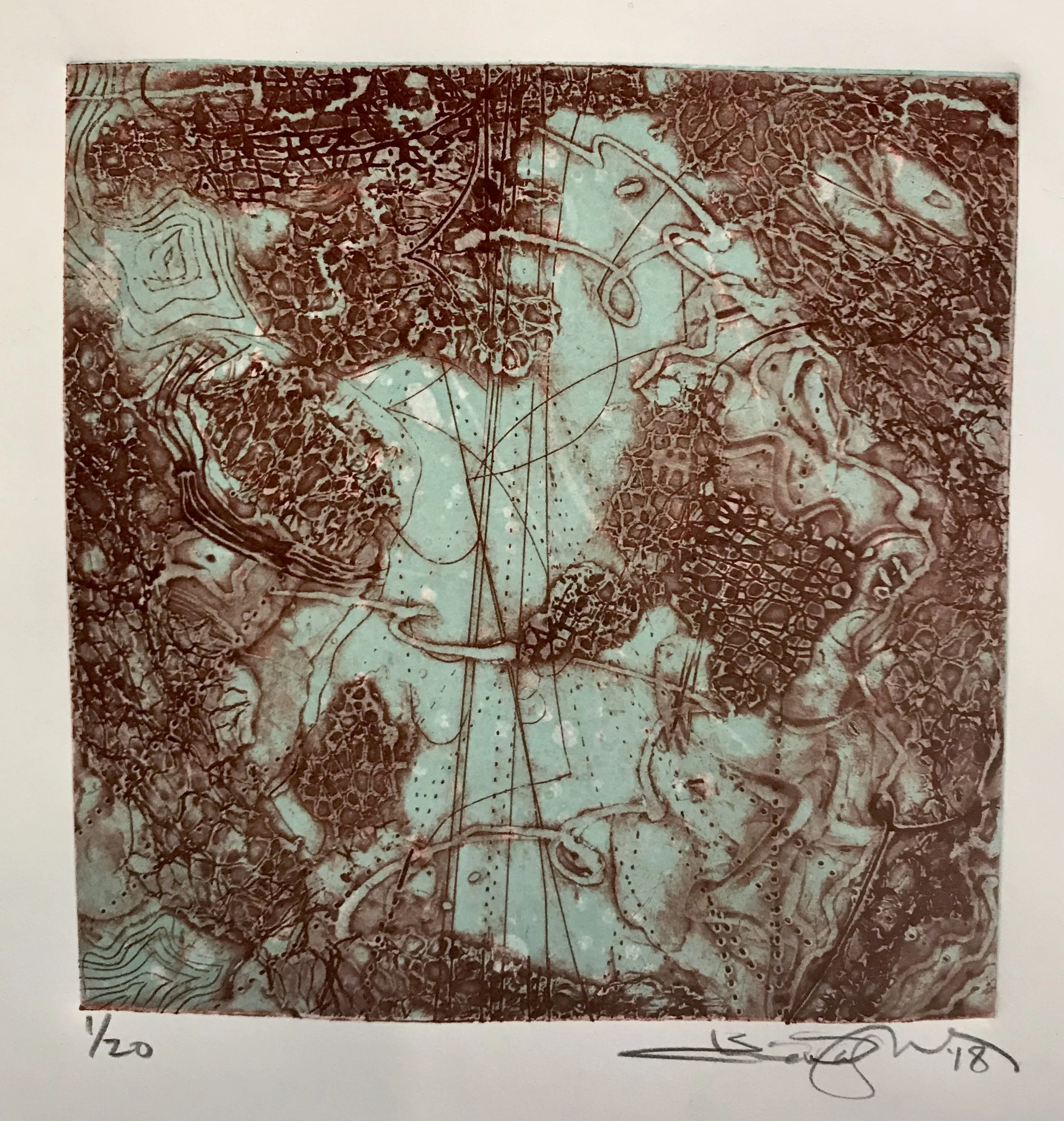
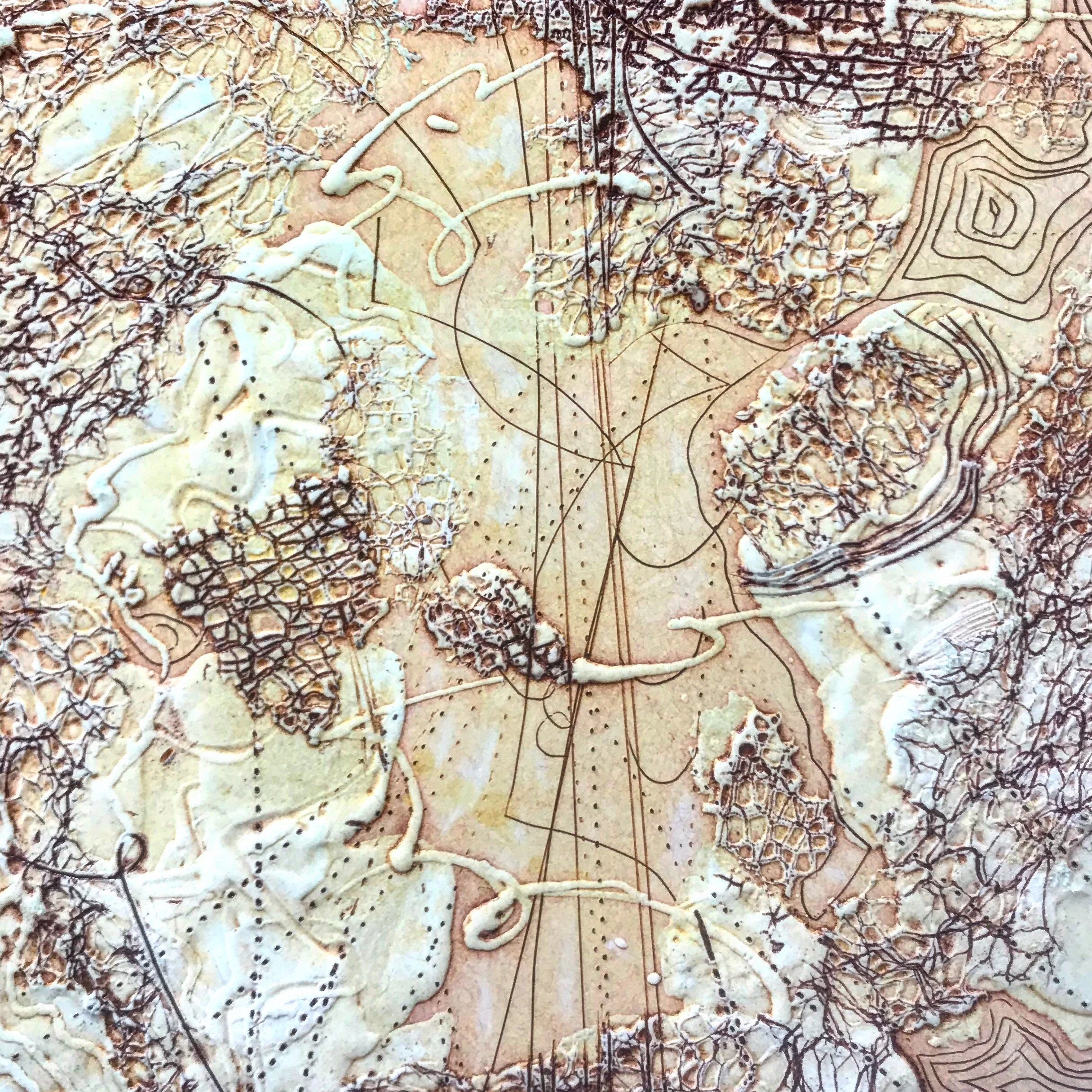
A collagraph plate is a collage built on a rigid base. Cardboard, fabric, string, sand, gesso and carborundum all get glued down, and each one soaks up ink differently. That is the beauty of the process, and also the challenge. Some areas grab too much ink. Others barely hold any. Two textures sitting side by side on the same plate can behave like they belong to different printmaking worlds.
If you come to collagraph from etching or relief printing, this can feel strange at first. A copper plate is uniform, so the tool marks make the image. A collagraph plate is the opposite. The surface itself is the image, and you are working with a material that has opinions about how it wants to print.
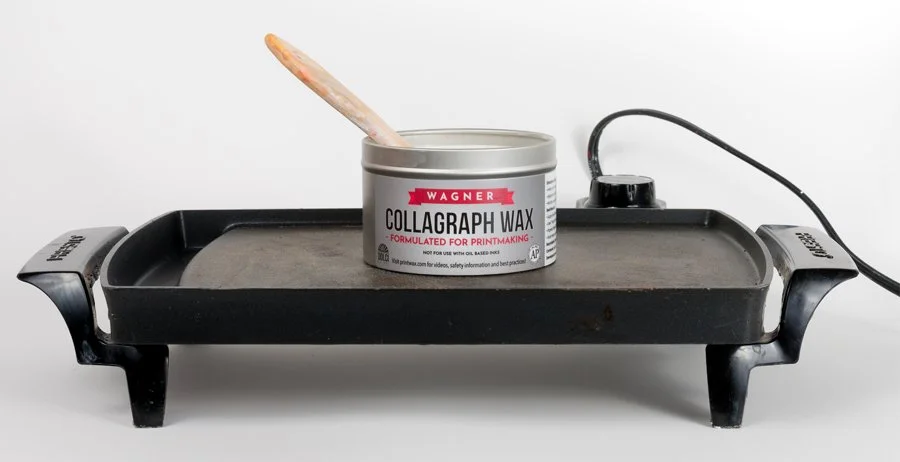
Where wax comes in
Applied to the plate, collagraph wax changes how the surface takes and releases ink. Areas with more wax tend to resist ink and print lighter. Areas with less wax hold more ink and print darker. Instead of fighting the plate, you are shaping the values you want before you ever reach the press.
Think of it as a dimmer switch. Without wax, many collagraph plates behave like a light that is either fully on or fully off. With wax, you get the steps in between: the soft grays, the gentle transitions, and the clean whites that make a print feel dimensional.
Why a wax made for collagraph?
Wagner Collagraph Wax was developed by artist and printmaker Elise Wagner specifically for this purpose. She wanted a material designed around the needs of a collagraph plate, rather than adapting something made for another craft. It is made from natural beeswax, damar resin and titanium white pigment, and it is ACMI AP certified, which is reassuring if you work in a shared studio, a school, or a community print shop.
A few things wax can do for a collagraph plate
Add tonal range, from deep blacks to soft grays to clean whites
Help control how much ink stays in textured areas
Make wiping more predictable from one print to the next
Give you a way to revise a plate without rebuilding it
Let you work more intuitively, adjusting the plate as you see what it prints
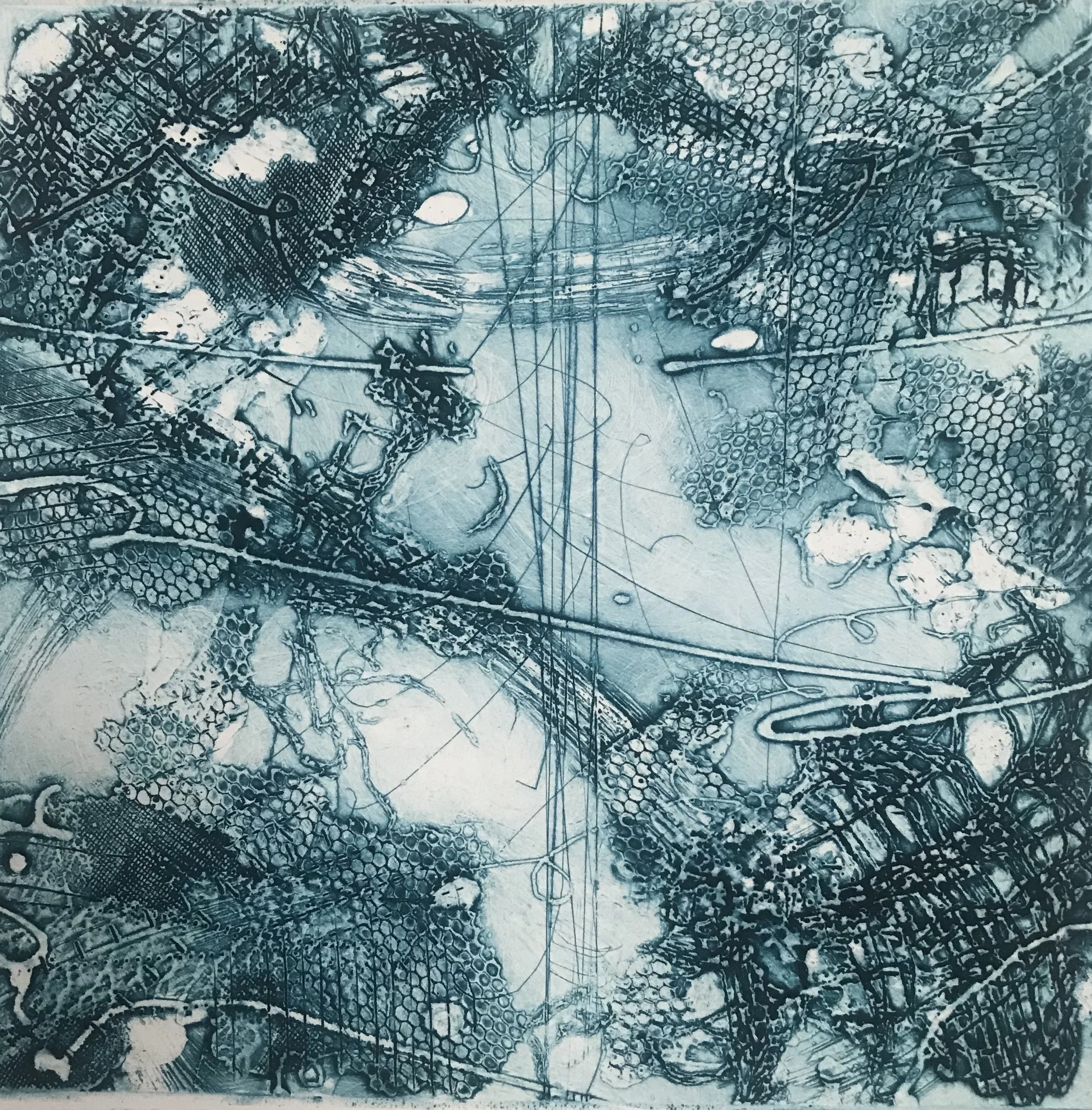
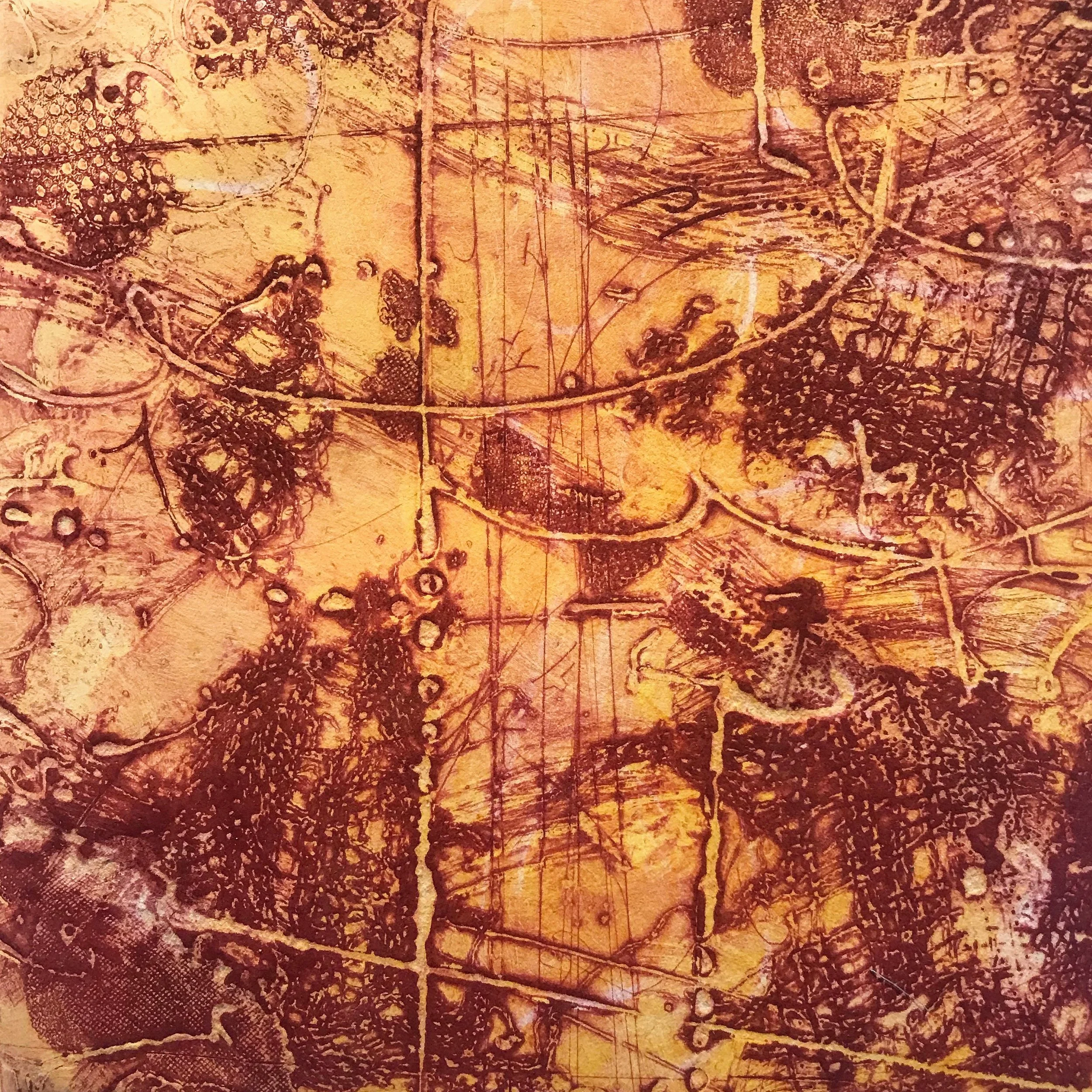
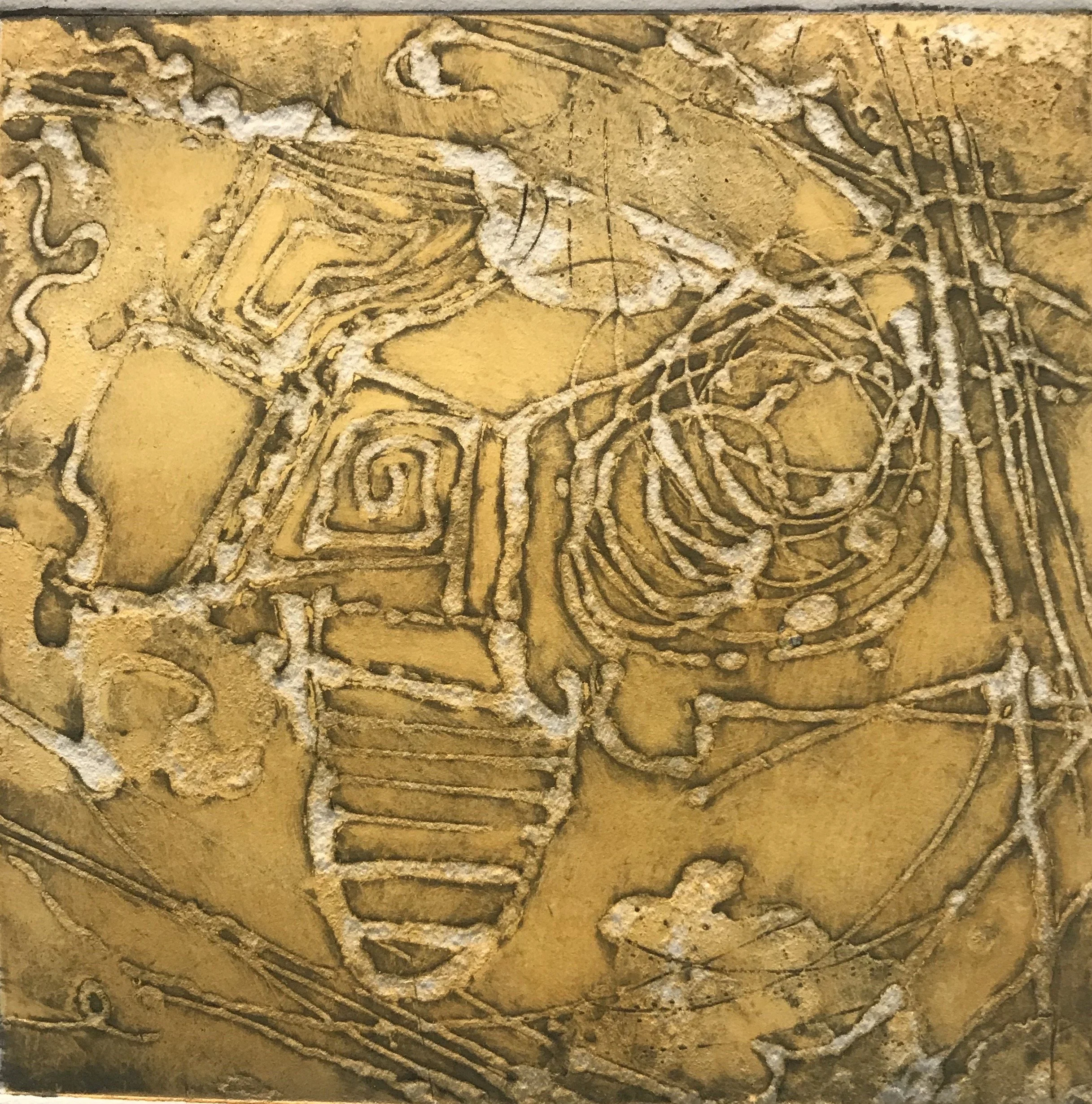
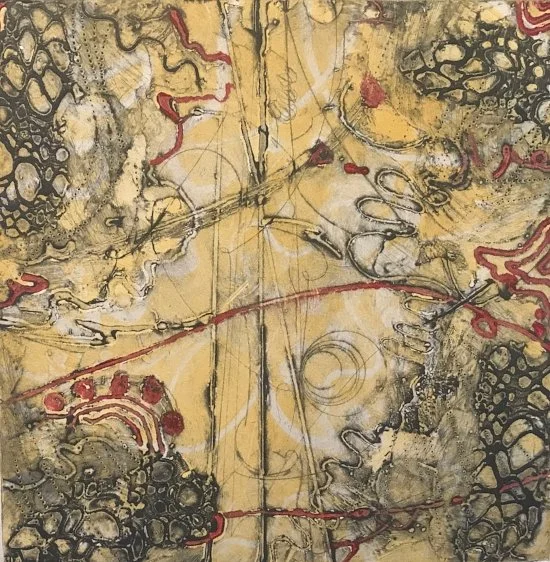
A word on revision
One of the quiet benefits of working with wax is that a plate does not have to be finished the first time you ink it. You can pull a proof, look at where the image feels too heavy or too weak, and make changes. Over a few rounds, a plate gradually becomes what you pictured. Many printmakers find that this back and forth is where their best work happens.
If you have ever pulled a collagraph print that came out muddy or flat, wax is worth a try. It will not replace good plate building or good wiping, but it gives you one more way to steer the result.
Ready to try it? Wagner Collagraph Wax is available in 6 oz and 12 oz cans at printwax.com.